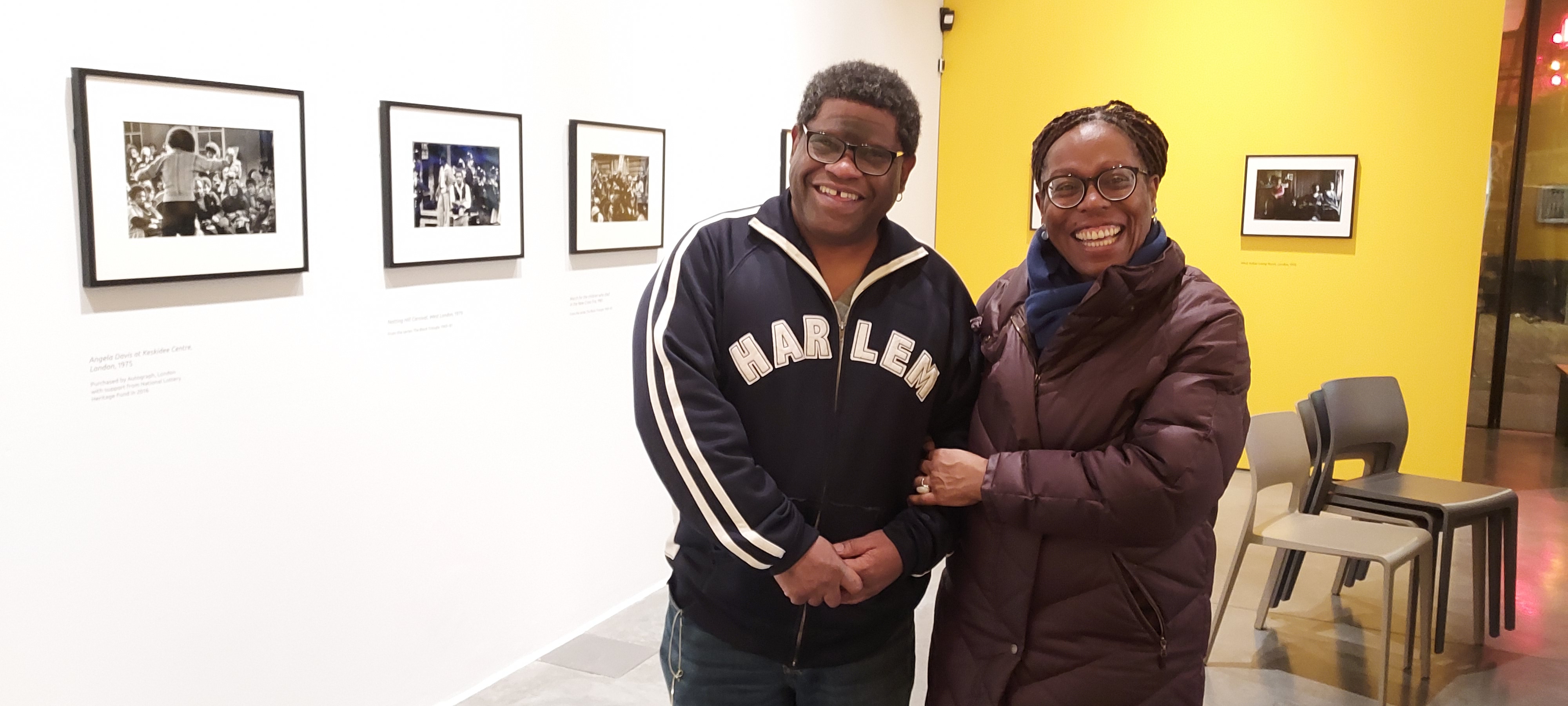
Attending a gallery-based discussion at Autograph in London on January 18th enabled me to meet the pioneering and internationally renowned Jamaican-British documentary photographer Armet Francis (b. 1945, Santa Cruz, St Elizabeth, Ja.), whose work was displayed in the exhibition “Armet Francis: Beyond the Black Triangle” (22 September 2023 – 20 January 2024).
The evening session featured a three-way discussion between curator Dr Mark Sealy OBE (Director, Autograph), award-winning author and journalist Gary Younge, and Armet Francis himself – who initially sat in the audience for the curatorial overview and contextualisation of his oeuvre, and then joined the two speakers in front of a slide-show of his images to engage in wider conversations with us as the attending members of the public (c. 50-60 visitors).
The curator’s perspective

During his opening remarks Mark Sealy praised the longevity, range and quality of Armet Francis’ lens-based artistic practice, aptly using the portmanteau phrase “cura-sational moment” to convey that the event provided an opportunity to chronologize and applaud the achievements of a trail-blazing documentarian and arts activist, expressing our gratitude to him face-to-face. It was felt that Armet Francis’ long-established status as a veteran of Black British photography, and a superb visual chronicler of the cultural diversity of African and Caribbean diaspora communities in Britain dating back to the Windrush era, needed to be formally acknowledged and foregrounded as an act of homage and veneration.
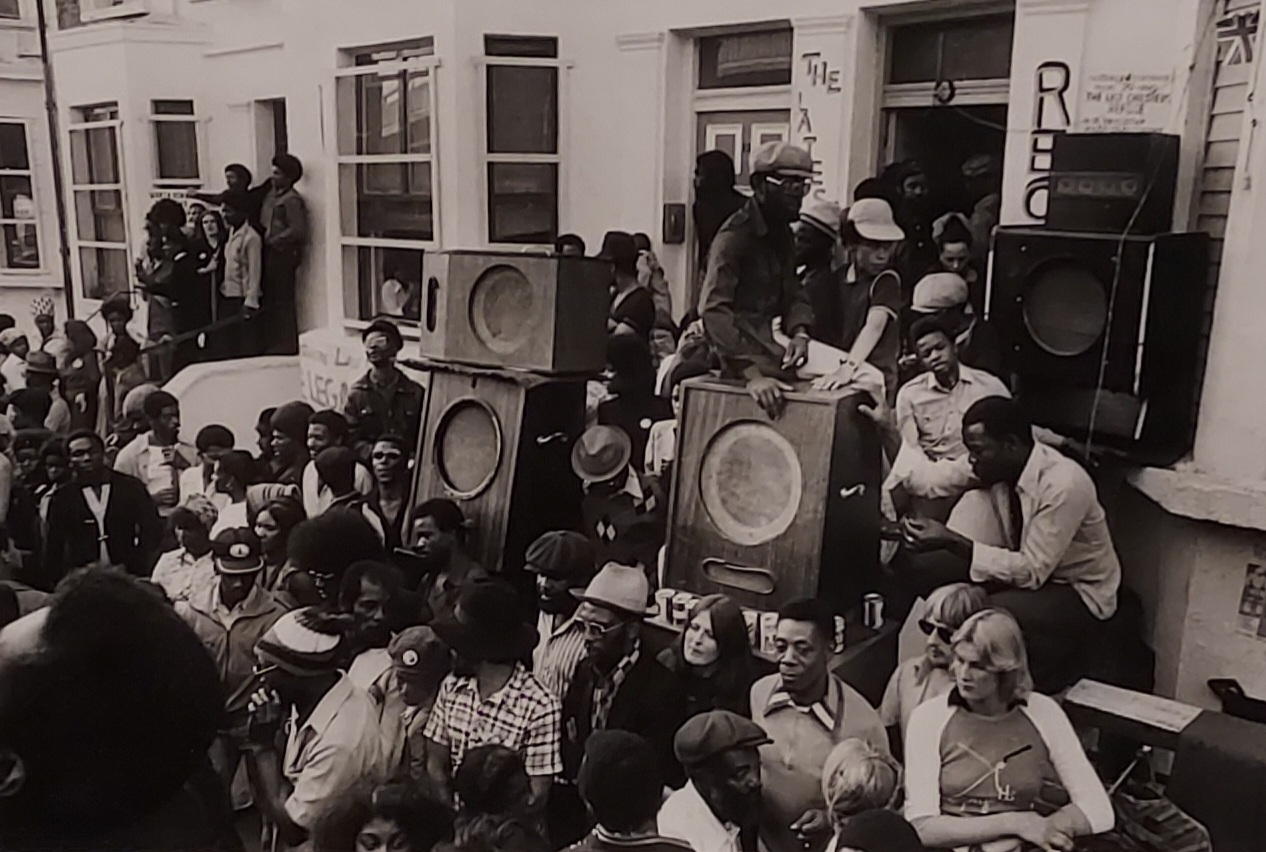
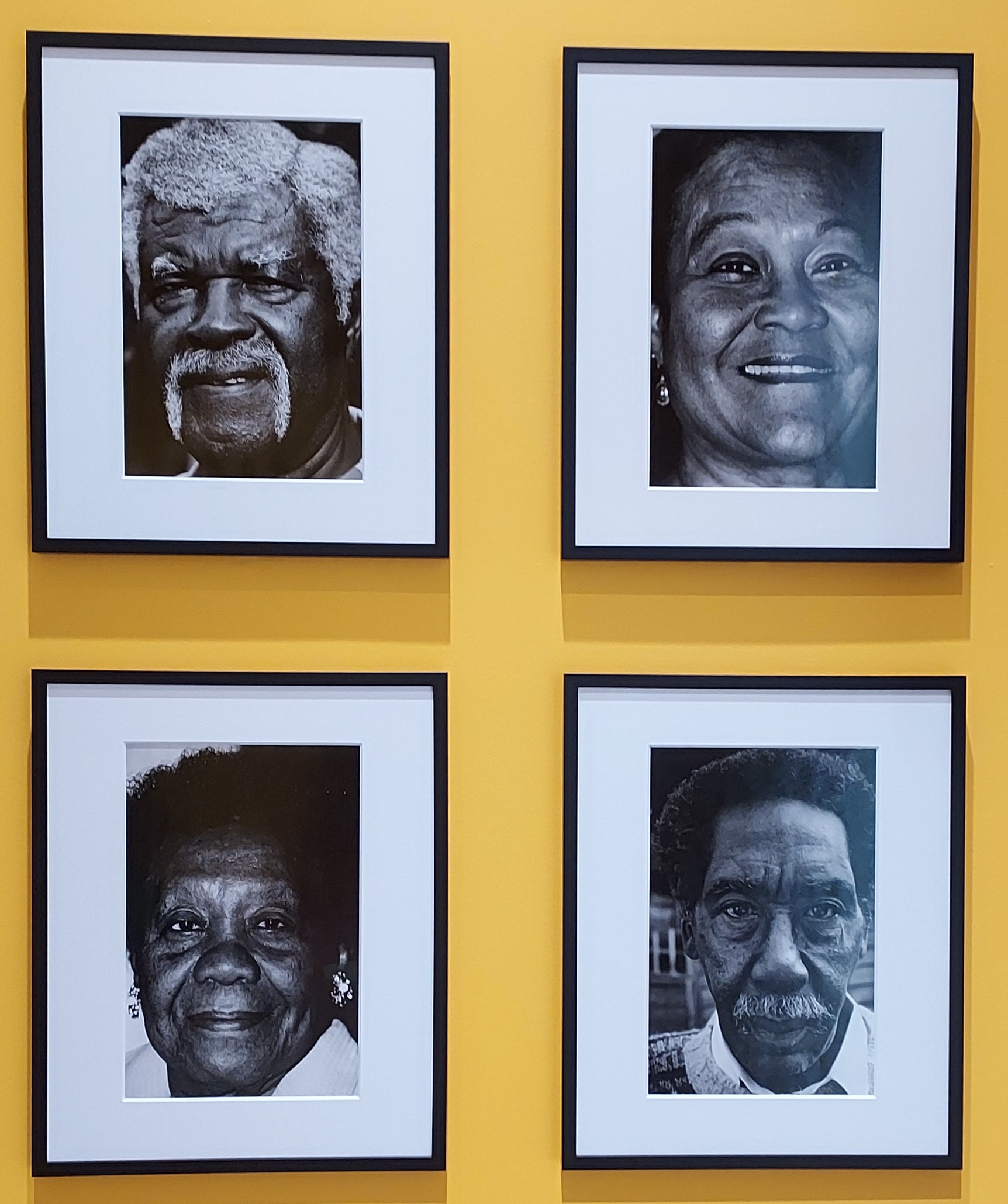
Central to the exhibition and its curatorial narrative was the focus on Armet Francis’ seminal Atlantic world series completed over a 13-year period – titled “The Black Triangle” (1969-81). This important body of documentary work was positioned as the core of a much broader selection of lens-based work spanning the period from Armet Francis’ early image-making in the 1960s through to his celebrated portfolio of stunning, commissioned black and white portraits of notable Windrush generation elders photographed in 2008.
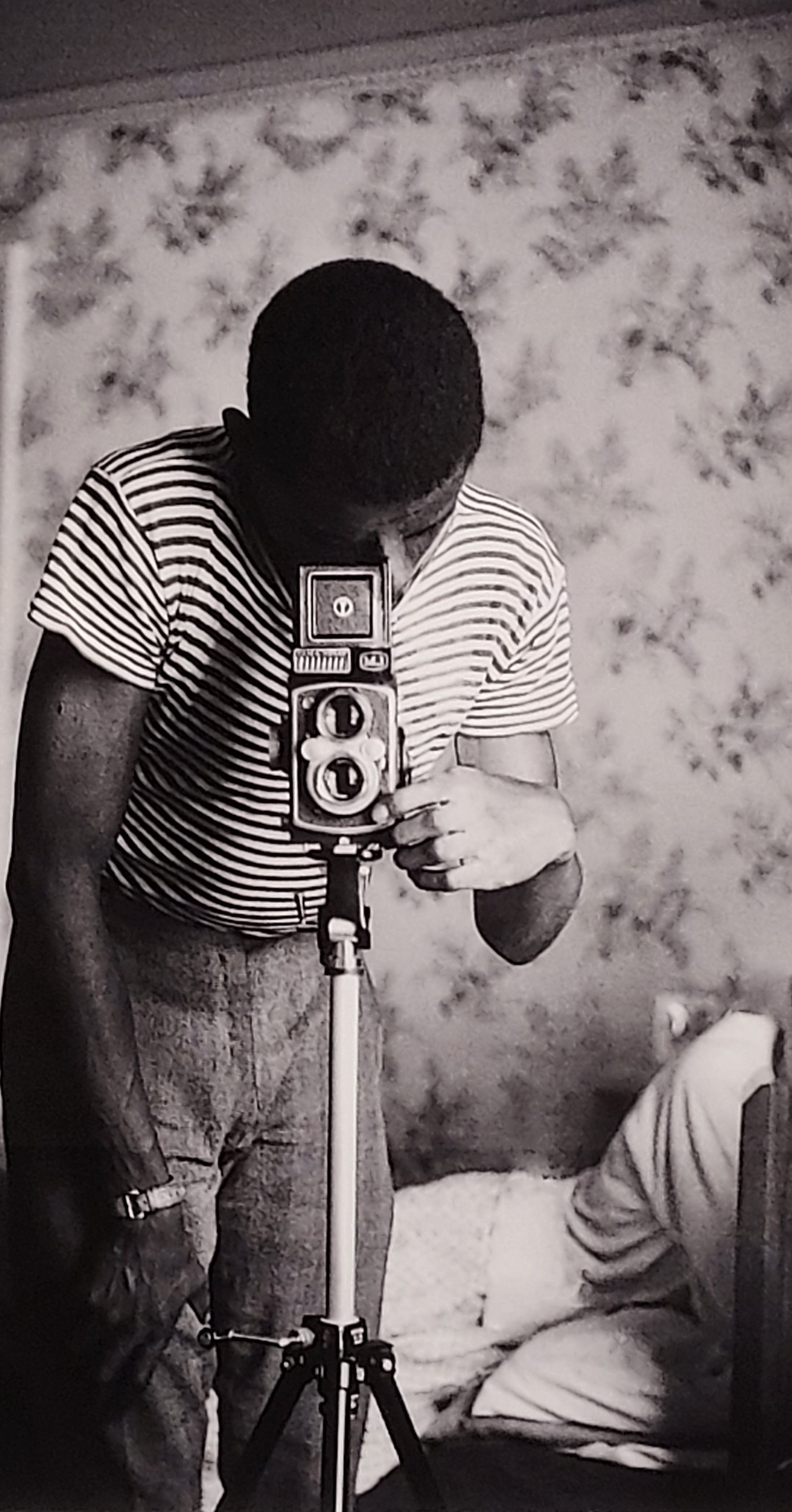
Armet Francis’ approach to photography was defined as a “radical act of documentation” because of the way he chose to record and centre the lived realities of African and Caribbean diasporic life in Britain from a position of inherent knowing and understanding – precisely because he himself is an integral member of the communities in focus. However, Mark Sealy was also keen to shed light on Armet’s socio-cultural and socio-political role as one of the first tranche of Black British “Dark Room Voices” – i.e. the men and women who served as founders of the UK’s Association of Black Photographers (Autograph – ABP) during its inception in 1988. All the pioneers in this collective – which included (among others) luminaries such as Jamaican-born photographer and archivist Dr Vanley Burke from the West Midlands, and Brixton-based photographer and media scholar Neil Kenlock MBE – established a group of resistance-focused arts activists determined to counteract the negative, racially stereotyped, and deliberately biased depictions of Black people within mainstream media representations of multicultural Britain.
The diasporic context
Award-winning author, journalist and academic Gary Younge (Professor of Sociology, Manchester University, UK) provided a chronological, socio-political and geographical contextualisation of Armet Francis’ photography, using the Black Atlantic to situate the oeuvre within a global geopolitical and cultural framework.
Given that Armet was born and raised in Santa Cruz, Jamaica, at the end of World War Two – when the island was still a British colony, and governed as part of a global Empire – 1945 became the point of departure for setting the scene for the photographer’s future life experiences with/in Britain, and the circum-Atlantic world more broadly.
Gary began by remarking on the racist treatment of the thousands of African soldiers (then known as “colonial military troops”) – who had played such a significant and prominent role in the liberation of metropolitan France – being denied the opportunity to be seen and celebrated marching to the heart of Paris with their white European military counterparts as part of Europe’s victorious, liberating forces. This deliberate visual erasure and “whitening” (or “blanchiment”) of the European continent’s liberation narrative for World War Two was seen as emblematic of how Blackness has always been de-normalised and minimised in the grand narratives of former imperialist nations.
Descriptions of the turbulent, post-war race relations experienced throughout the 1950s and ’60s followed, with references to key rights campaigners, historic events and collective actions in the UK. For example, the “race riots” of Notting Hill and Nottingham were rightly re-named as “pogroms,” and the anti-racist activism of Black community champions (such as Trinidadian journalist and carnival arts icon Claudia Jones (1915-1964), and Windrush Foundation charity founder Sam King MBE (1926-2016)) were used to signify key moments and actants involved in the shaping and resilience-building of settled Black diasporic communities in Britain.
The arc of Gary’s context-sharing peaked with his references to Jamaica’s independence in 1962, and the shifting dynamics of citizenship, identity, sense of belonging and interdependency throughout the post-imperial Commonwealth of nations.

The presentation concluded with an insightful observation about the 1970s and 1980s opening up new opportunities for creatives like Armet Francis to find space to document and author “moments of joy” just as much as their continuing focus on politically-themed photographic work.
Armet’s visual testimony
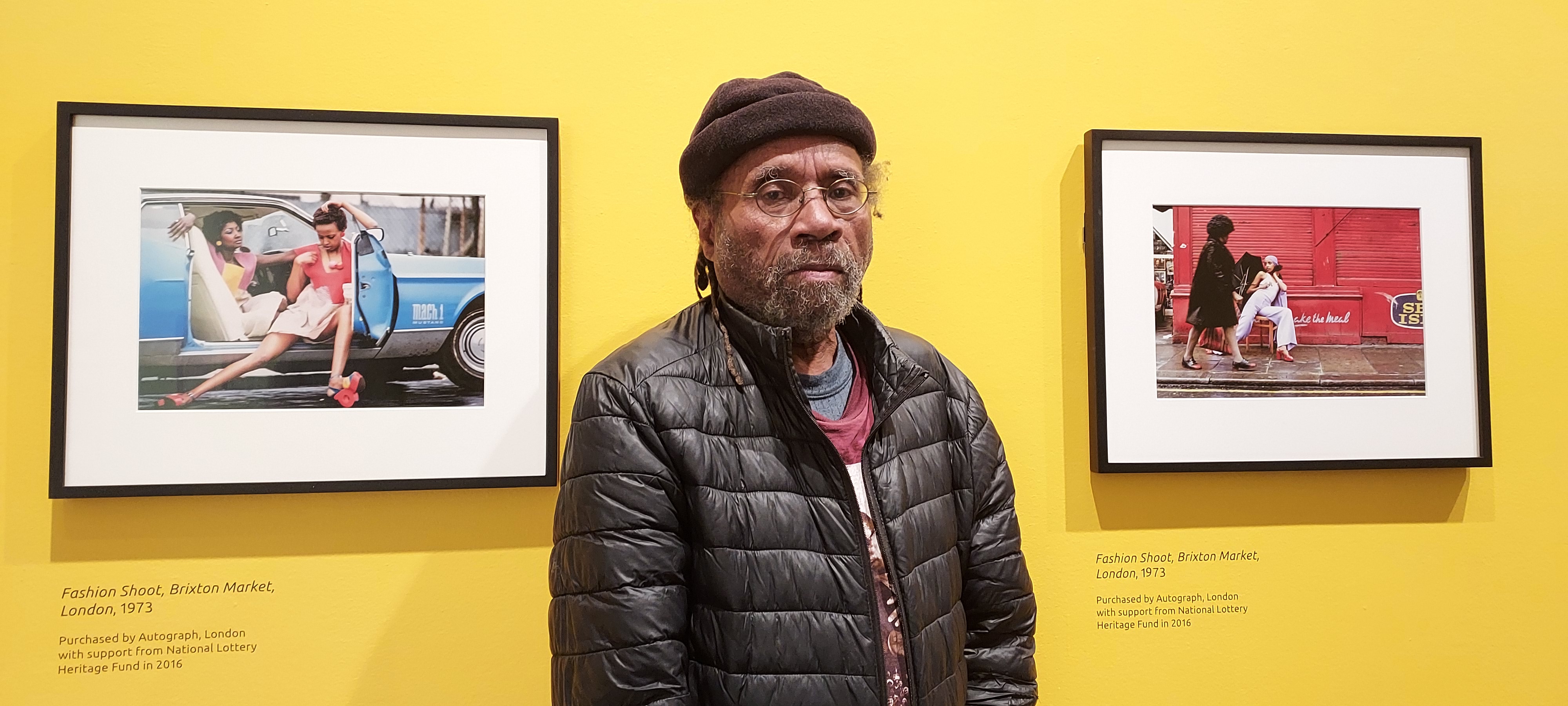
“[T]he triangle first came to me in thoughts of the slave trade route. I realised this is what it’s about now, the Civil Rights movement, the Rastafarian movement. There was no history of Black photographers in England. I decided to make Black images, to capture how Black people perform in a certain vernacular, with certain experiences and histories, with all its social and political implications.”
Armet Francis, discussing his photographic series – The Black Triangle, 1969-81.
Speaking directly with the photographer in the setting of his wonderful exhibition was an immense privilege. I took the opportunity to shake Armet’s hand and commend him for his steadfastness as an arts activist, documentarian and archivist. Moreover, listening to his personal reflections on completing several major photo shoots around the world – including in Jamaica, Senegal, and Ethiopia – was awe-inspiring as we both stood and admired the fruits of his labour displayed around the gallery walls.
Concluding thoughts…
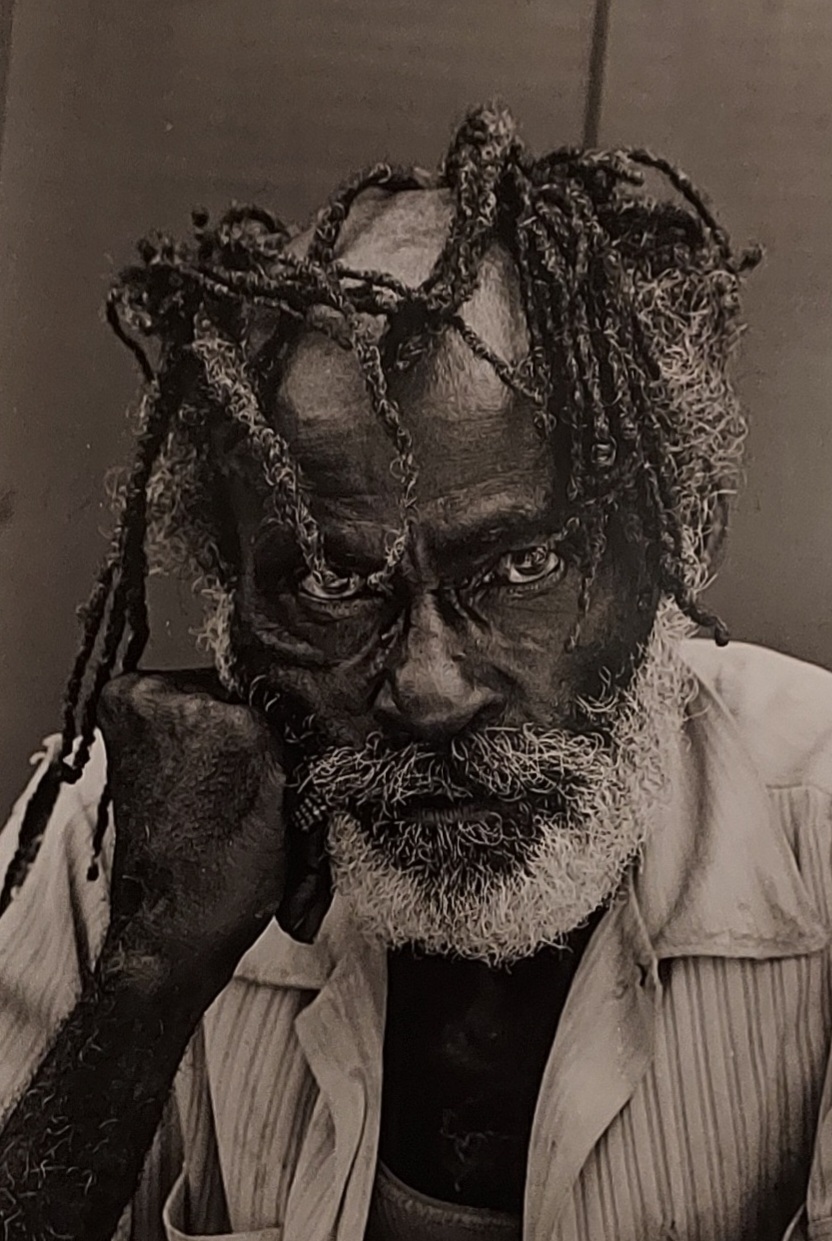
My personal highlights of this exhibition included: the beautiful black and white series of Windrush Generation portraits from 2008; the single-figure images of Senegalese sitters from the 1970s; and the Jamaican street scene portraiture from the late-1960s to 1980s, taken at sites such as May Pen Market and the Tuff Gong recording studios in Kingston.
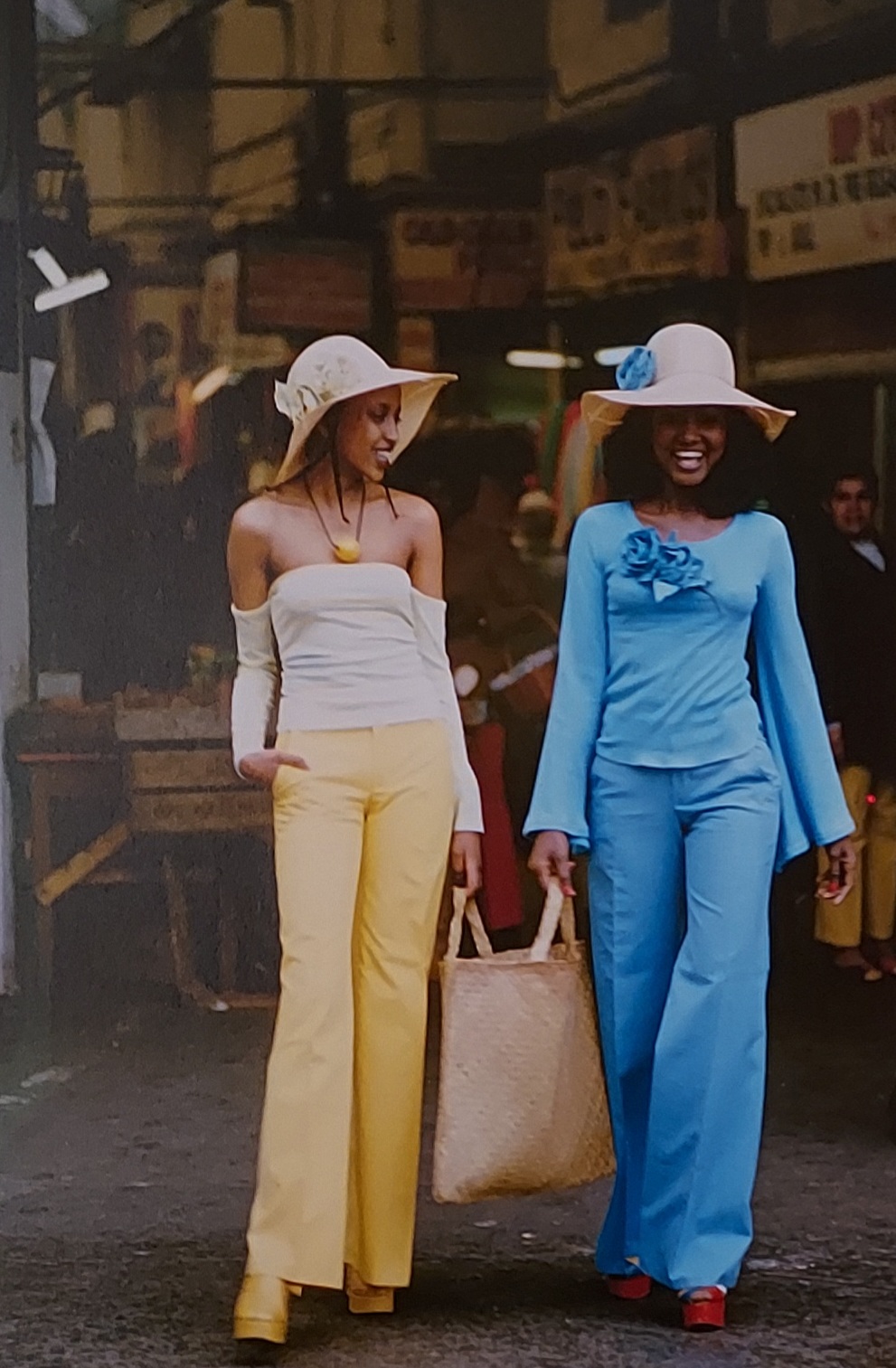
I also appreciated the photographer’s contributions to fashion photography and the advertising industry spanning several decades, represented in the gallery through the inclusion of a selection of colour images taken during a Brixton Market photoshoot in 1973.

Further information
An exhibition summary of “Armet Francis: Beyond the Black Triangle” is viewable online via Autograph’s website at this link: https://autograph.org.uk/exhibitions/armet-francis-beyond-the-black-triangle
Further information about the photographer’s biography and oeuvre can also be accessed from the following publications, websites and interactive online presentations:
Autograph ABP’s VR Virtual Tour of the exhibition, Armet Francis: Beyond the Black Triangle. https://autograph.org.uk/exhibitions-vr-visits/vr-exhibition-visit-armet-francis/
Farquharson, Alex, and David A. Bailey, MBE (Eds). 2021. Life Between Islands: Caribbean-British Art 1950s – Exhibition Catalogue. London: Tate Publishing, 2021.
Hall, Stuart. 1994. ‘Cultural Identity and Diaspora.’ In, Williams, P., & Chrisman, L. (Eds). Colonial Discourse and Post-Colonial Theory: A Reader (1st ed.). Routledge. https://doi.org/10.4324/9781315656496
Life Between Islands – Online Exhibition Guide. https://www.tate.org.uk/whats-on/tate-britain/life-between-islands/exhibition-guide

Leave a comment