It was a pleasure and a privilege to be invited to give a presentation at the recent transdisciplinary conference and community conversation held at The Exchange, Birmingham, on 1 June 2024. Convened by Dr Nathaniel Adam Tobias Coleman (Visiting Fellow, University of Birmingham), and titled “Undoing 2007; Preparing for 2038,” this whole-day programme of thematic panel sessions, archive-related research narratives and public dialogues focused on bicentennial commemorations of Atlantic world histories and geographies of struggle, resistance, abolition and emancipation in relation to ending enslavement in the anglophone Caribbean.
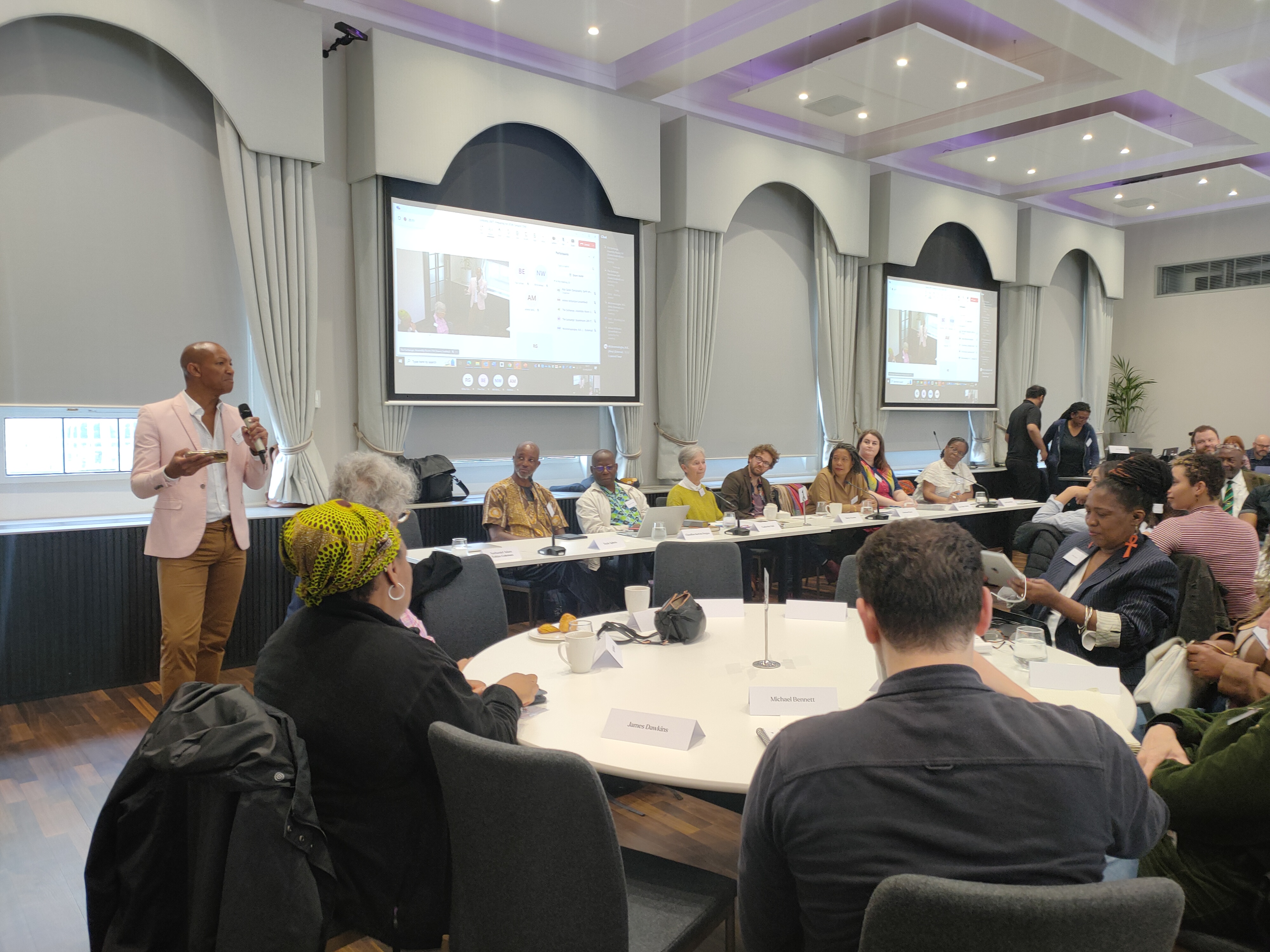
Central to the event’s aims was a determination to demand more from the UK heritage sector and its major funders –particularly the UK’s publicly funded national and local authority museums, libraries and archives, and the National Lottery Heritage Fund – to ensure that decolonial and anti-racist approaches to commemorating histories of enslavement resistance, abolition, and freedom-fighting (especially heritage initiatives proposed by scholars and creatives with African and Caribbean heritage) are properly resourced and prioritised.
Researchers, memory workers, community advocates and activists drawn from academia, the GLAM sector (galleries, libraries, archives and museums), rights organisations and education charities in Britain, and internationally, came together to respond to three sets of questions and provocations, sub-titled: (1) From Amelioration to Birmingham; (2) From Birmingham to Jamaica; (3) From Jamaica to Reparation.
Below is a summary of the main discussion points and outcomes arising from these sessions, with links to a selection of publications and online resources written by the featured participants.
Conversation 1: Panel 1: From Amelioration to Birmingham
In the introductory panel, Dr Nathaniel Adam Tobias Coleman invited the following five speakers to share insights from past research and heritage work linked to the event’s core themes: Dr Toyin Agbetu (UCL); Professor Nira Wickramasinghe (Leiden University); Dr Claudius Fergus (University of the West Indies, St Augustine); Professor Catherine Hall (UCL); and me, Dr Carol Ann Dixon (Cultural Geographer and Education Consultant, affiliated to Newcastle University).
Scholar-activist Dr Toyin Agbetu opened the conversation by responding to a question about what resistance looks like “when living within the belly of the beast.” Speaking from direct experience of having challenged institutionalized denials and state refusals to issue a formal apology for the devastating atrocities and legacies of the Maafa inflicted on African peoples, Dr Agbetu poignantly recounted feeling compelled by our ancestors to make a personal, non-violent protest during the ‘Abolition 200’ service of commemoration attended by the late Queen, Elizabeth II, and former Prime Minister Tony Blair at Westminster Abbey in 2007. The resulting media backlash he experienced for (literally) taking a stand, and peacefully questioning the ethics of that event, was (and continues to be) deeply traumatizing. Nevertheless, Toyin has remained steadfast and resolute in his activism, and used this session to offer encouragements to everyone in the audience to keep pursuing justice for our forebears, and ourselves, as an act of love for all humanity.
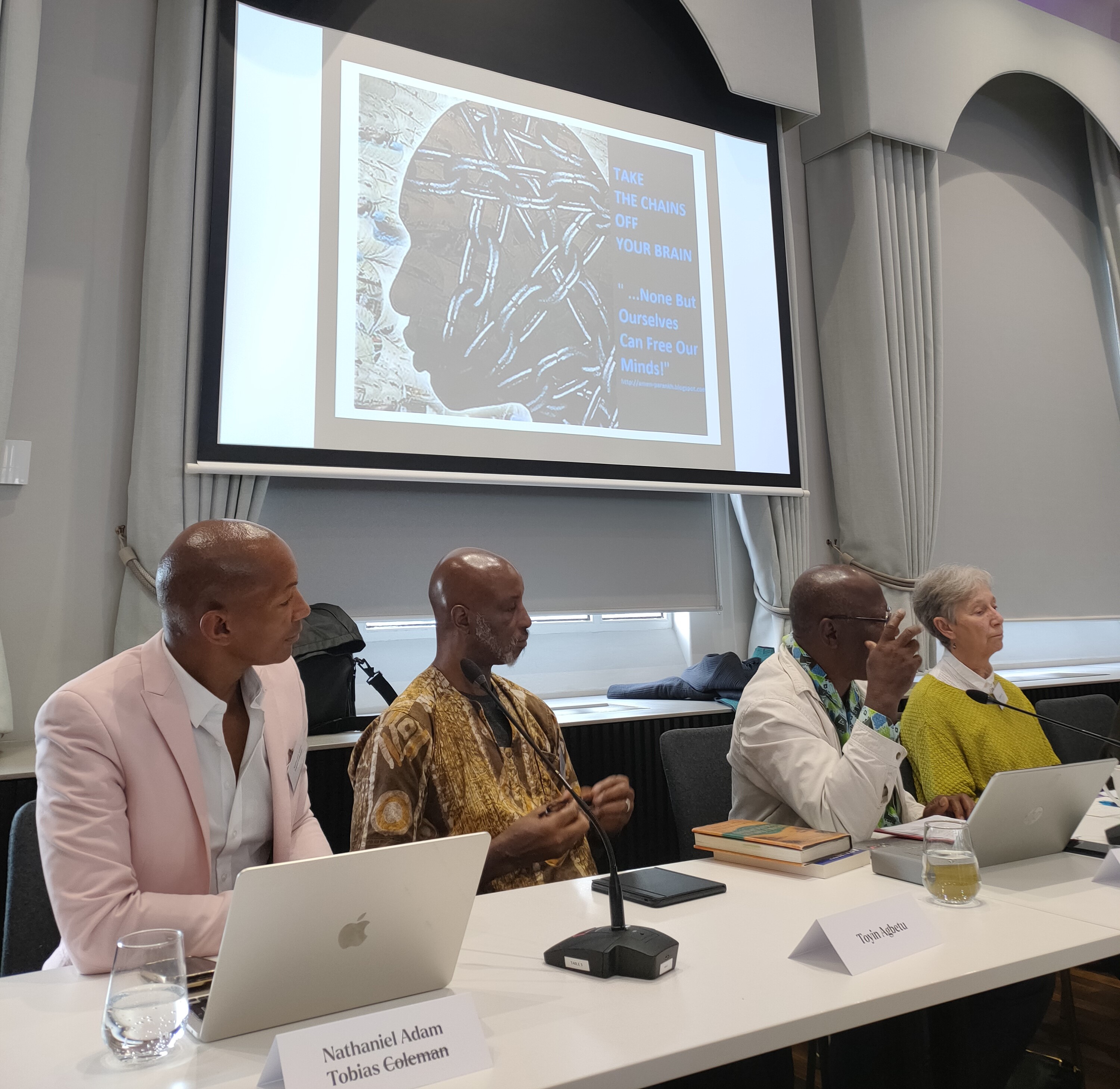
The three historians on the panel followed with a suite of inter-related papers, each discussing the transition from enslavement to emancipation, specifically: “Ending Slavery? Connected Oceanic Histories of its Amelioration,” recorded as a filmed PowerPoint presentation by Professor Nira Wickramasinghe (Leiden University); “Revolutionary Emancipation: Slavery and Abolitionism in the British West Indies / How did ‘amelioration’ become Britain’s first Code Noir / Slave Code?” presented in person by Dr Claudius Fergus (UWI, St Augustine); and the paper “Civilising Subjects: Metropole and Colony in the English Imagination, 1830-1867 /
Can we repair – and build – learn from the past, and look to the future?” presented by Professor Catherine Hall, with a focus on Birmingham’s historic role in the abolition movement, and an appraisal of the strategies of some of the most prominent, Midlands-based anti-slavery campaigners, such as Elizabeth Heyrick (1769-1831) and Joseph Sturge (1793-1859).
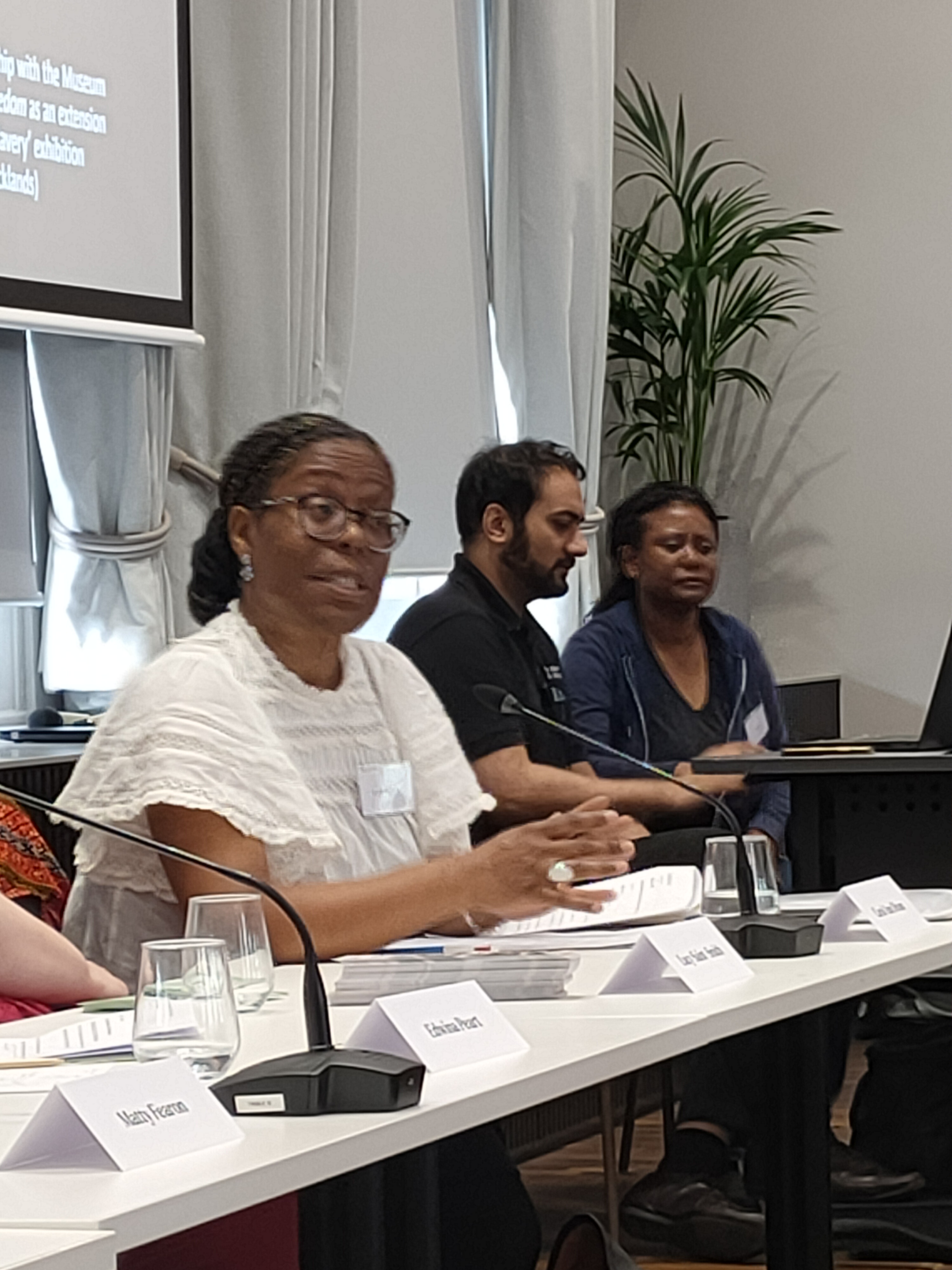
For my part, I presented a summary of Windrush Foundation’s exhibition and e-learning project, “Making Freedom: Riots, Rebellions and Revolutions” – a ground-breaking heritage partnership that involved co-production of a major, multi-media exhibition shown at the Royal Geographical Society in London (November-December, 2013), the creation of a 12-panel mobile display that toured libraries and community venues in the UK and the Caribbean region, and the publication of a 90-page digitized education pack.
Having been invited to serve as the panel’s concluding respondent, my analysis of the four preceding papers, alongside my own illustrated review of Making Freedom, is shared in the film below (Duration: 16 minutes).
Conversation 2: From Birmingham to Jamaica
The middle session of “Undoing 2007; Preparing for 2038” took place at the Wolfson Centre for Archival Research, and The Gallery at the Library of Birmingham.
Particular highlights from the displayed archival collections included:
- Minutes of the Birmingham Anti-Slavery Society, 1826-1837, and 1837-1859 (Ref. MS 3058/1 & MS 3058/2)
- Manuscripts of the Birmingham Ladies Anti-Slavery Society (formerly known as the “Birmingham Ladies Negro’s Friend Society for the Relief of Negro Slaves”), (Ref. MS 3173/1/1 – 2/1, Minutes 1825-1852; Leaflets MS 3173/4/1)
- Newspaper cuttings, magazine articles, books and other printed sources discussing the life and work of Quaker abolitionist Joseph Sturge (1793-1859) (Refs. Birmingham History D/14 B; D/18; L 78.1 STU 14718; & L 78.1 STU 275386)
- Documentary photographs of the Joseph Sturge Memorial Statue, designed by sculptor John Thomas (1862) and located at Five Ways in central Birmingham (Refs. WPS/WK/B11/4578 – B11/6569; WPS/WK/E1/382 – E1/1466)
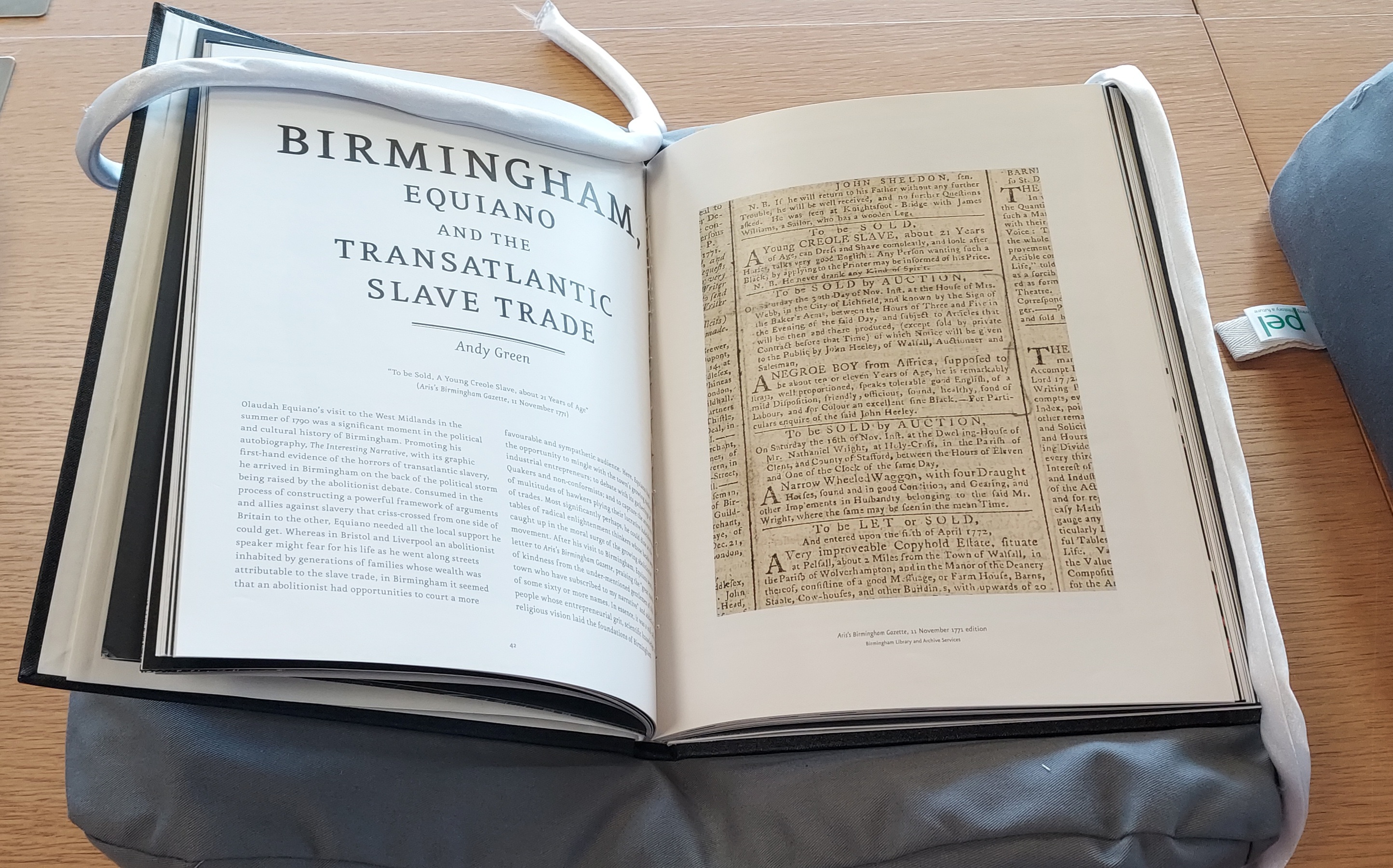
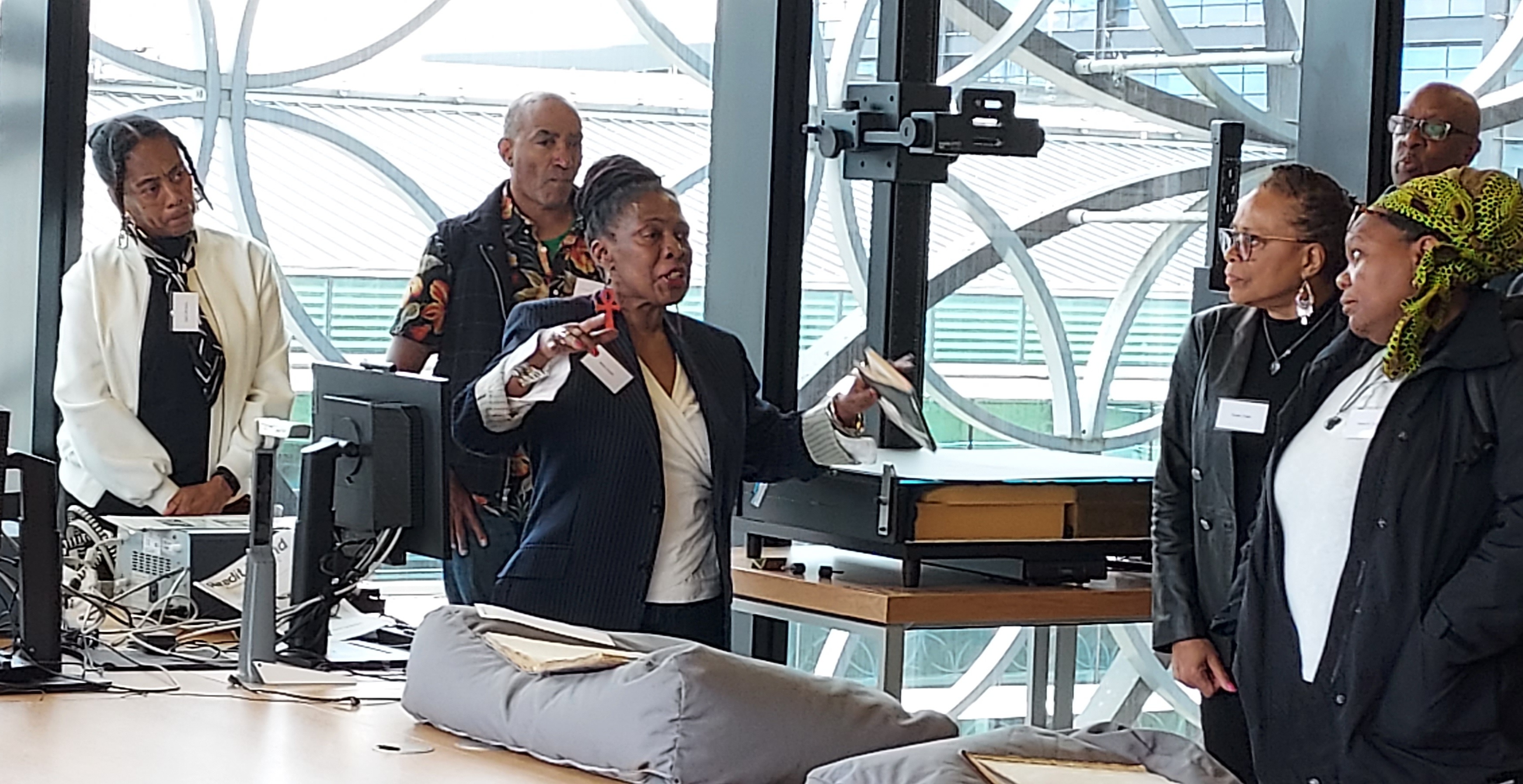
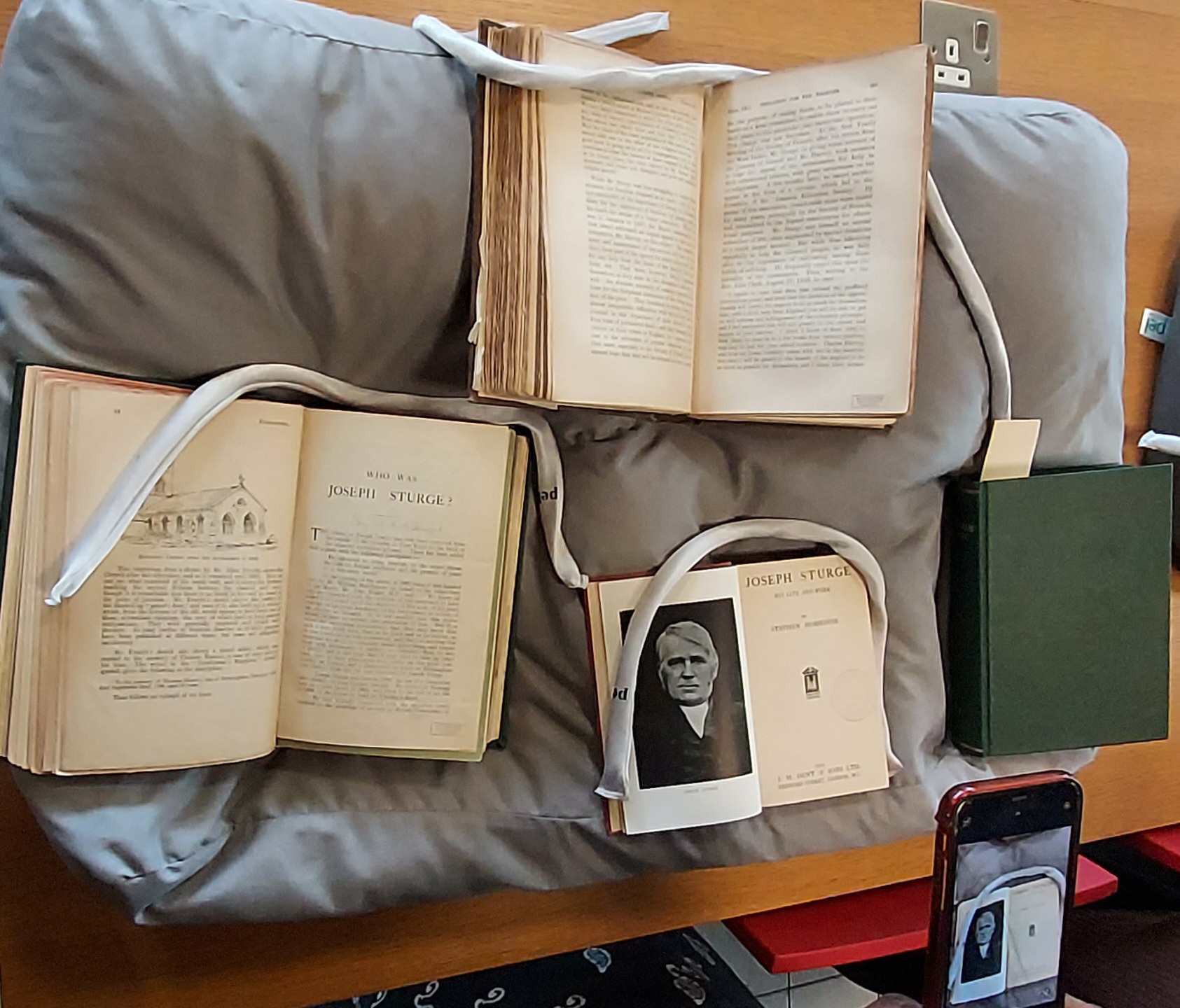
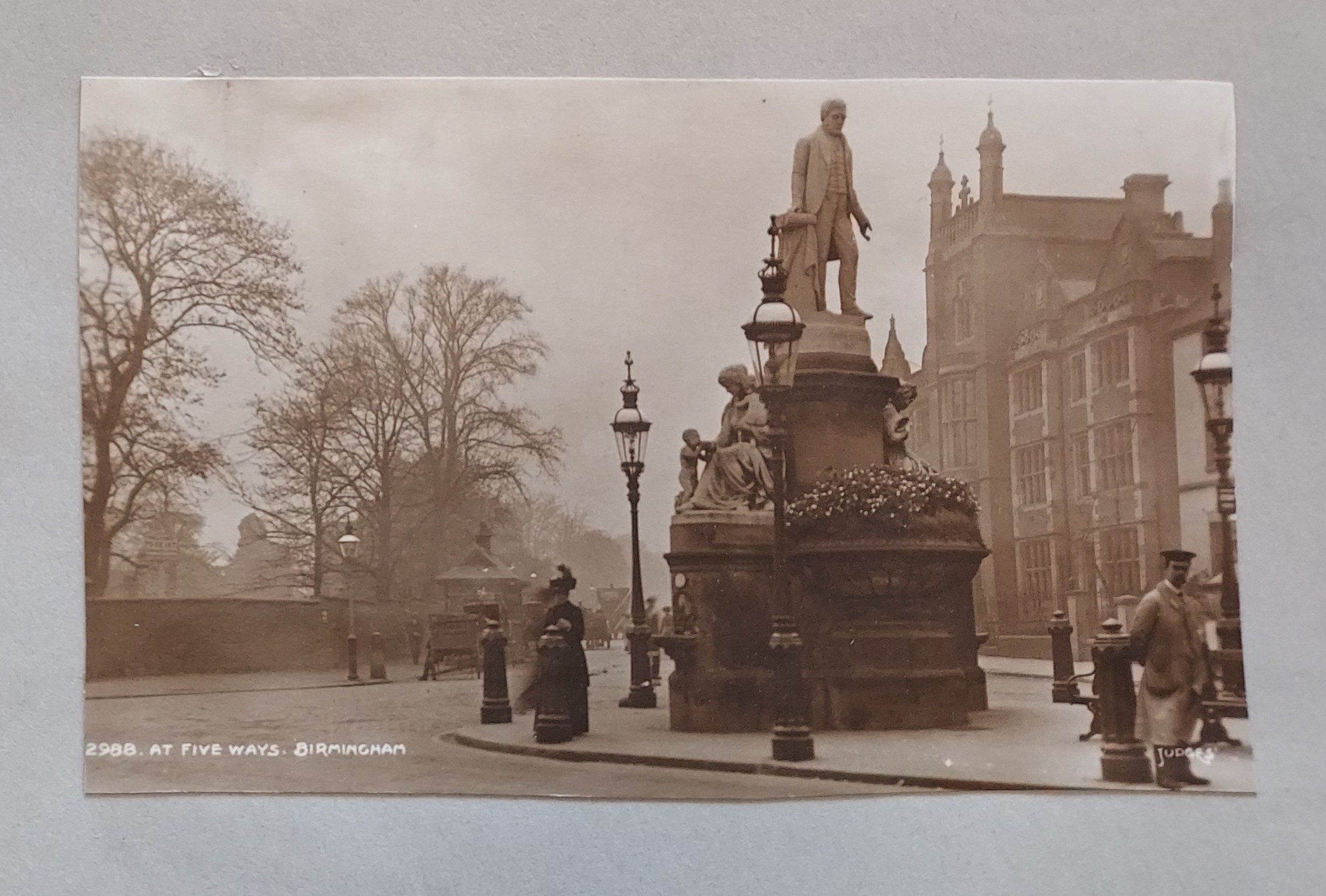
As an integral aspect of the archive-based workshop, several collections-focused presentations were shared by scholars from the University of Birmingham: including an overview of key abolitionists’ papers critiqued by event convenor Dr Nathaniel Adam Tobias Coleman, who is currently working on a new book themed on ‘The City of Birmingham as Britain’s Abolition Geography’; and a talk by researcher Ifemu Omari about her PhD project on the life of Mary Prince (c. 1788-183?) – the formerly enslaved Bermudan woman whose 19th century narrated autobiography, The History of Mary Prince: A West Indian Slave (1831), was the first life story by an African-Caribbean woman to be published in Britain.
Relatedly, in the library’s third floor gallery space, delegates had an opportunity to view an exhibition titled “Intended for Jamaica.” This thought-provoking, artist-led project by documentary photographer and fine artist Tracey Thorne featured a visualisation of her personal responses to researching archives held in Birmingham’s Boulton and Watt Collection. A particular focus of this presentation was an assemblage of historic documents, maps, blueprints and contemporary cyanotypes referencing the sale of steam engines manufactured in Boulton and Watt Company’s Soho Foundry that were transported from the West Midlands to sugar plantations in Jamaica during the early 19th century. The artist’s expressed intentions were to challenge dominant, prevailing narratives about Birmingham’s heroic industrial heritage and, in doing so, recover erased histories of enslavement and imperialism. In this way her work also encouraged reflection on how best to respectfully acknowledge and memorialise the complex entanglements of empire in the 21st century. For further information, and a selection of images from this project, please see this link to the artist’s web space at https://www.traceythorne.com/latestworks.
Conversation 3: From Jamaica to Reparation
In the afternoon session attention turned to the scholar-activism of academics, heritage professionals and reparative justice campaigners based in the Caribbean region. This third set of conversations began with live and pre-recorded online presentations shared by the following contributors: Reverend Dr Doreen Morrison (Open Door Mission, St. Elizabeth, Jamaica); knowledge managers Gabrielle Hemmings and John Shorter (Centre for Reparation Research, University of the West Indies, Mona Campus); Bernadette Worrell Johnson and Dunstan Newman (University of the West Indies, Mona Library), who specifically spoke about projects involving the protection of endangered archives; and representatives of The Alps Community Development Organisation and Alps Sisters’ Movement, based in South Trelawney, in a rural locality formerly known as “New Birmingham” (including Allison Dean, Lynvol Campbell, Verona Chambers, Devon Ferguson, and Delroy Scott).
A unifying theme connecting all the Jamaican presentations was their collective call for the establishment of genuinely equitable, trans-diasporic partnerships between Caribbean-descent communities in the UK, international research networks, and residents’ collectives on the island actively campaigning to protect community land rights, preserve ancestral burial grounds, conserve wildlife habitats, and secure funding to pursue much-needed heritage developments in vulnerable (‘at risk’) areas facing the threat of encroachment and environmental damage wrought by bauxite mining companies. Additionally, Allison Dean reflected on the historic links between Birmingham in the UK and the locality once named “New Birmingham” in Jamaica, emphasising that significant funding was needed to support practical infrastructure improvements, as well as new heritage projects to build educational facilities (such as a community museum).
The concluding response to the panel was given by scholar-activist Arlene McKenzie from Jamaica’s Rastafari Indigenous Village, who spoke passionately in support of Jamaica’s (and CARICOM’s) reparative justice campaigns and educational initiatives intended to address and repair the ongoing epistemic harms, as well as the socio-economic and environmental impacts that remain in the Caribbean as legacies of enslavement, colonial exploitation and extractive capitalism.
Concluding thoughts…
It was wonderful to contribute to such an engaging, interdisciplinary conference and community consultation focused on long-term strategic planning to co-produce commemorative heritage initiatives examining the combined resistances and uprisings of African-descent freedom-fighters in the Caribbean, and abolitionists campaigning in Britain. The hard-fought struggles throughout the Atlantic world to achieve “full free” emancipation from enslavement and apprenticeship in the anglophone islands and nations of the Caribbean region on August 1st, 1838, need to be remembered and given much greater prominence in mainstream discourse about the history of empire. I remain hopeful these transnational conversations will enable a number of new partnerships to be forged so that we can all draw on each other’s strengths to deliver a fitting, well-funded series of commemorations in the years leading up to 2038 that respectfully honour the lives and sacrifices of all who fought and died for freedom.
Further Reading and Online Resources
Agbetu, Toyin. (2007) Britain: “Not In Our Name,” New African, Issue 463, pp. 82-86.
Agbetu, Toyin. (2007) ‘My protest was born of anger, not madness,‘ The Guardian, Tuesday 3 April 2007 [Online article] www.theguardian.com/theguardian/2007/apr/03/features11.g2
Dixon, Carol A. (2014) ‘Spotlight on… Making Freedom: Riots, rebellions and revolutions’, Geography, 99 (3), pp. 153–156. https://doi.org/10.1080/00167487.2014.12094409
Dixon, Carol A. (2014) Making Freedom: Riots, Rebellions and Revolutions. A Review of the Touring Exhibition, Museums Journal, Issue 114/07, pp. 52-53.
Fergus, Claudius K. (2013) Revolutionary Emancipation: Slavery and Abolitionism in the British West Indies. 1st edition. Baton Rouge: LSU Press.
Fergus, Claudius K. (2010) ‘The Bicentennial Commemorations: The Dilemma of Abolitionism in the Shadow of the Haitian Revolution’, Caribbean Quarterly, 56(1-2), pp. 139–158. https://doi.org/10.1080/00086495.2010.11672366
Hall, Catherine. (2002) Civilising subjects: metropole and colony in the English imagination, 1830-1867. Chicago, IL: University of Chicago Press.
Hall, C., Draper, N. & McClelland, K. (2015) Emancipation and the remaking of the British Imperial world. Manchester: Manchester University Press.
Undoing 2007; Preparing for 2038 – A day-long, co-productive community conversation, about Abolition, Birmingham, and Commemoration, convened and chaired by Dr Nathaniel Adam Tobias Coleman (University of Birmingham). https://www.birmingham.ac.uk/events/the-exchange/undoing-2007-preparing-for-2038

Leave a comment