“Exhibitions usually have a thread as the story unfolds. I’m purposely not doing that, to echo how you create an artwork – the gathering of objects, collage and layers.” Hew Locke (Guyanese-British artist-curator, b. 1959, Edinburgh, UK)
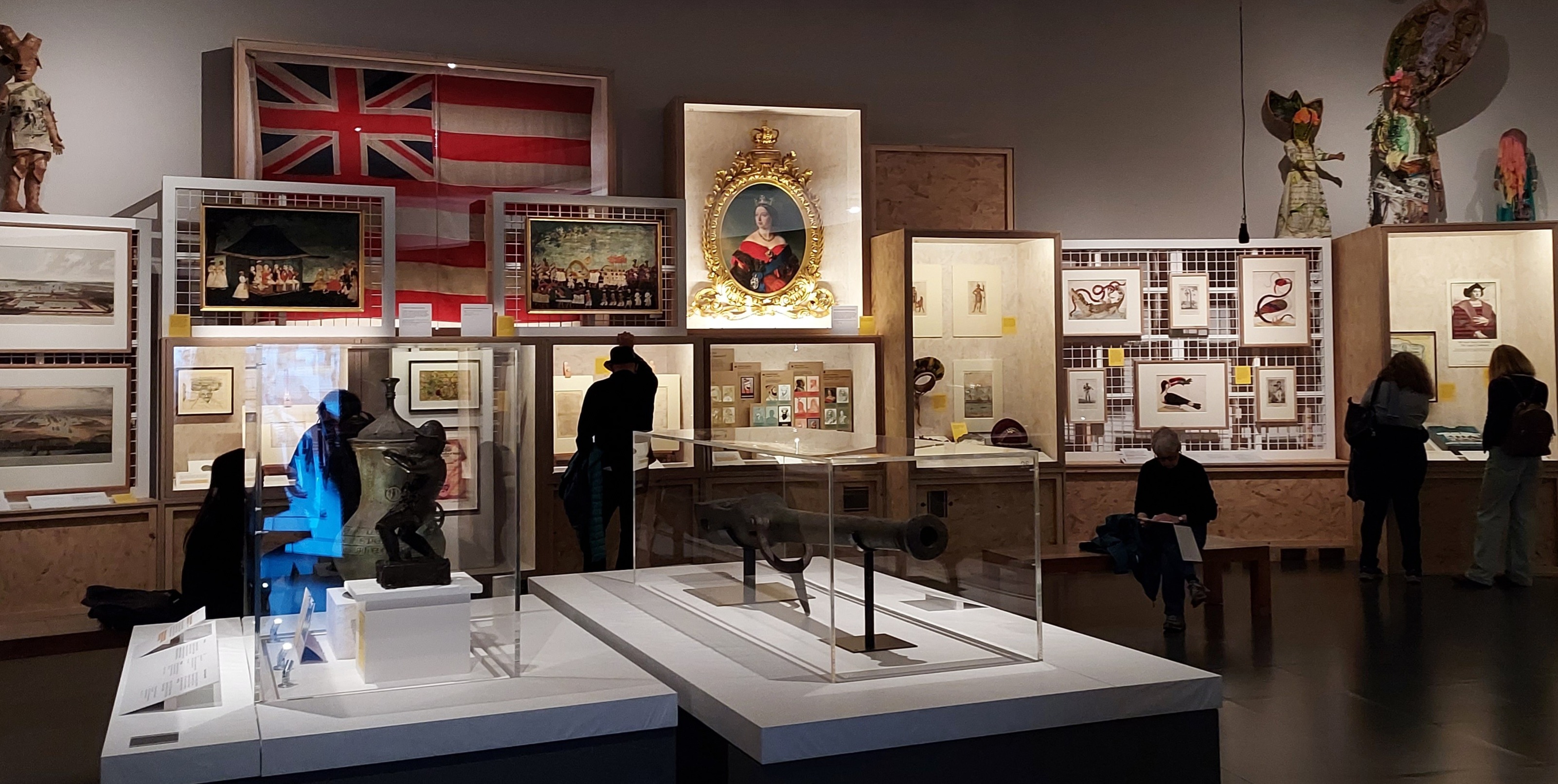
I am always encouraged by the title of a British Empire-themed exhibition framed as a question, as it suggests the curators are willing to engage in an open-ended dialogue with viewing audiences instead of attempting to present object assemblages and interpretation narratives as incontrovertible, immutable content. “Hew Locke: What have we here?” (British Museum, 17 October 2024 – 9 February 2025) was exactly that type of thought-provoking and pluralistic exhibition. Co-curated by the titular Guyanese-British artist, the author and arts scholar Indra Khanna and British Museum staff, the presentation in Room 35 (located in the viewing area above the Museum’s Great Court) offered a poignant examination of British imperialism and its afterlives, considered through the careful arrangement of historical artefacts, archival documents and contemporary sculptural installations.
This review follows the curators’ sequencing of the featured exhibits into six thematic sections (Introduction; Sovereigns; Trade; Conflict; Treasure; Epilogue), with each examining the complexities of Empire through the juxtaposition of old and new culturally significant objects. With a particular focus on both guest curators’ diasporic connections to the Caribbean region, continental Africa and Asia, the interpretation narrative drew upon philosophies sourced from the global majority world, including the Ghanaian/Akan principles of “Sankofa” (which translates as “go back and fetch it,” and is traditionally symbolised as a mythical bird with its head facing backwards), to encourage lessons to be learned from the past.
Introduction
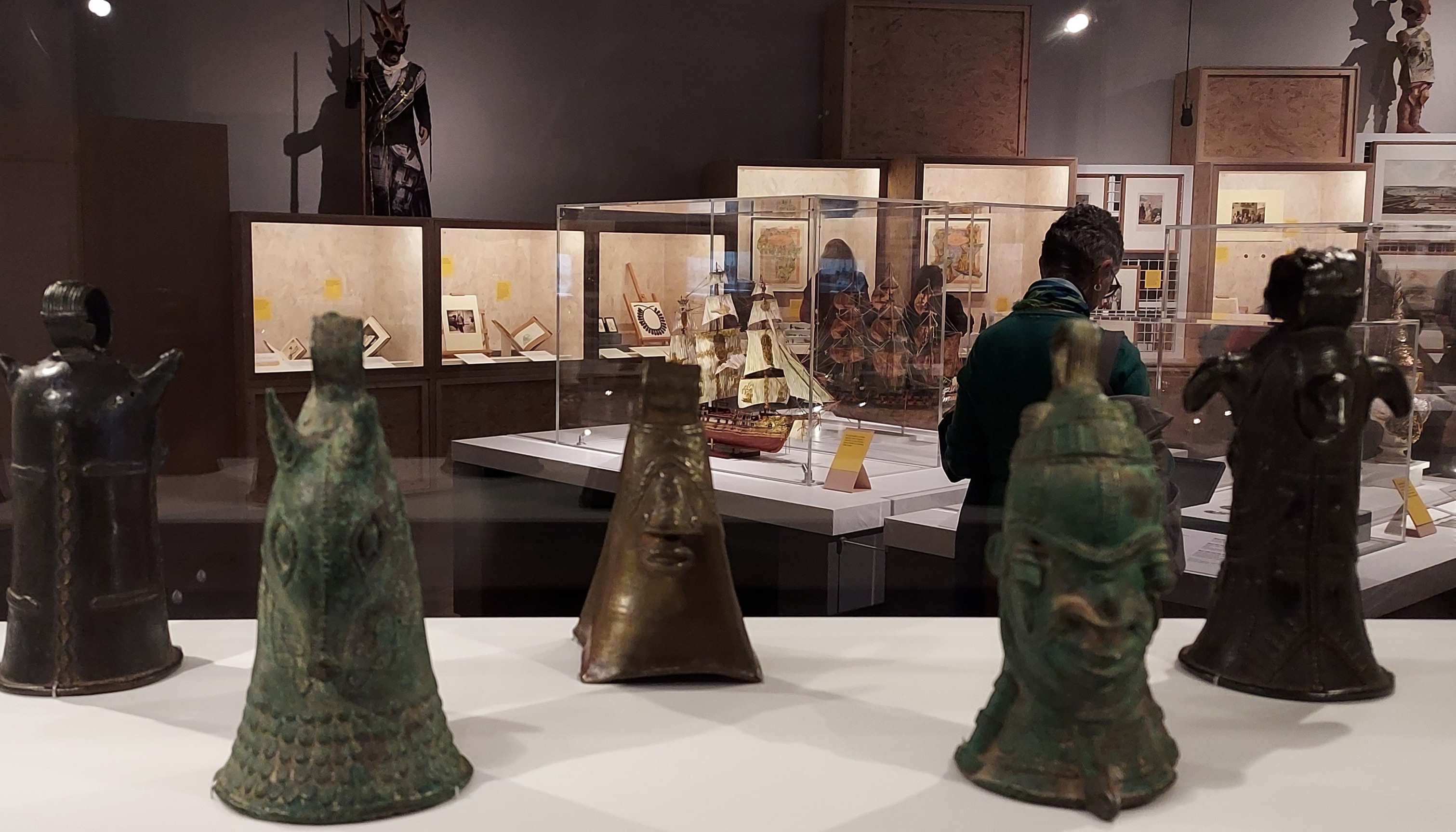
The introductory exhibits placed in recessed display cases along the entrance corridor symbolised the diversity, complexity, and artistry of majority world cultures before Western expansionism and colonialism throughout Africa, Asia, Oceania and the Americas. Notable highlights included a selection of brass and bronze bells dating from c.900ce created by Edo, Igala, Igbo and Yoruba artists from southern Nigeria.
These storyful objects were followed by a digital screen, prominently positioned on the corner of the next display case, where visitors came face-to-face with artist-curator Hew Locke sharing a recorded, piece-to-camera overview of his approach to undertaking the collections-based research and new artistic commissions for this exhibition.
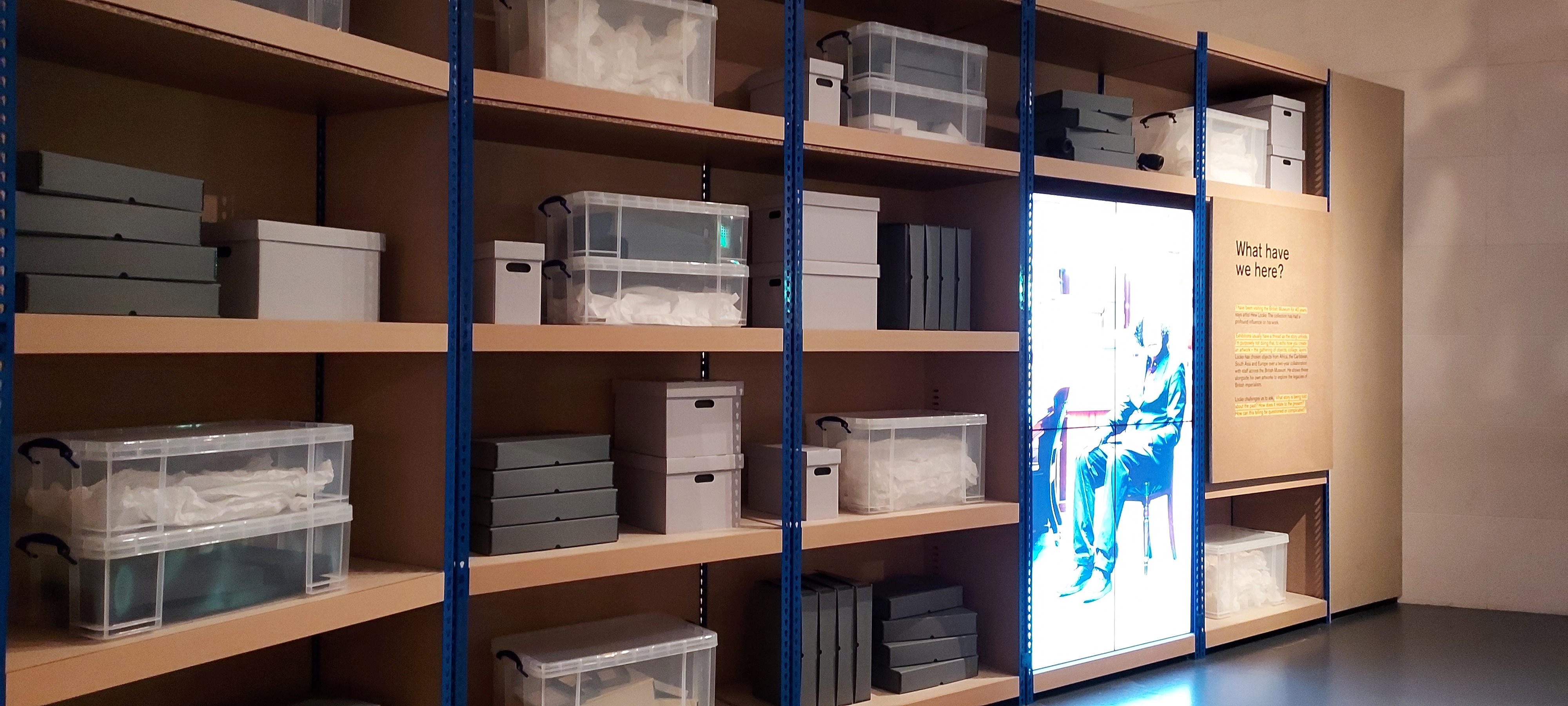
In keeping with the overarching title – “What have we here?” – Hew Locke challenged exhibition visitors to consider: “What story is being told about the past?; How does it relate to the present?; How can this telling be questioned or complicated?”
Significantly, the stack of archival storage boxes and crates on the adjacent shelves served to illustrate that this showcase had emerged from more than two years of exploratory research at the British Museum and other institutions, and represented an ever-unfinished process of historical (re-)discovery, revision and decolonial critique. It felt as though visitors were being invited to join in with the unpacking and re-interpretation processes, thus reinforcing an expectation of active, inquisitive engagement with the objects as opposed to passive spectatorship.
The storage-style shelving and packing crates continued within the main display space, giving the impression visitors were browsing archival stacks instead of a museum exhibition. These design features were complemented by the inclusion of poignant interpretation narratives written by Hew Locke, highlighted in yellow to visually distinguish his authorial voice from the more conventional and anonymised general description panels and object labels. Having these quotations and personal research insights re-emphasised the dialogical approach to Locke and Khanna’s co-curatorial practice and helped to illustrate their hybrid positionalities – i.e. neither museum insiders, nor complete outsiders, but rather intermediaries assuming fluid, unfixed, interlocutory roles to simultaneously pose challenging questions of the British Museum just as much as members of the public.

Sovereigns
This section concerned symbolic displays of imperial power. From large-scale portraits of past monarchs painted in oils, and early film footage of pageants staged to convey the might of Empire, through to the everyday replication of a sovereign’s image on a coat of arms, seals, coins, stamps, maps, and more.

Trade
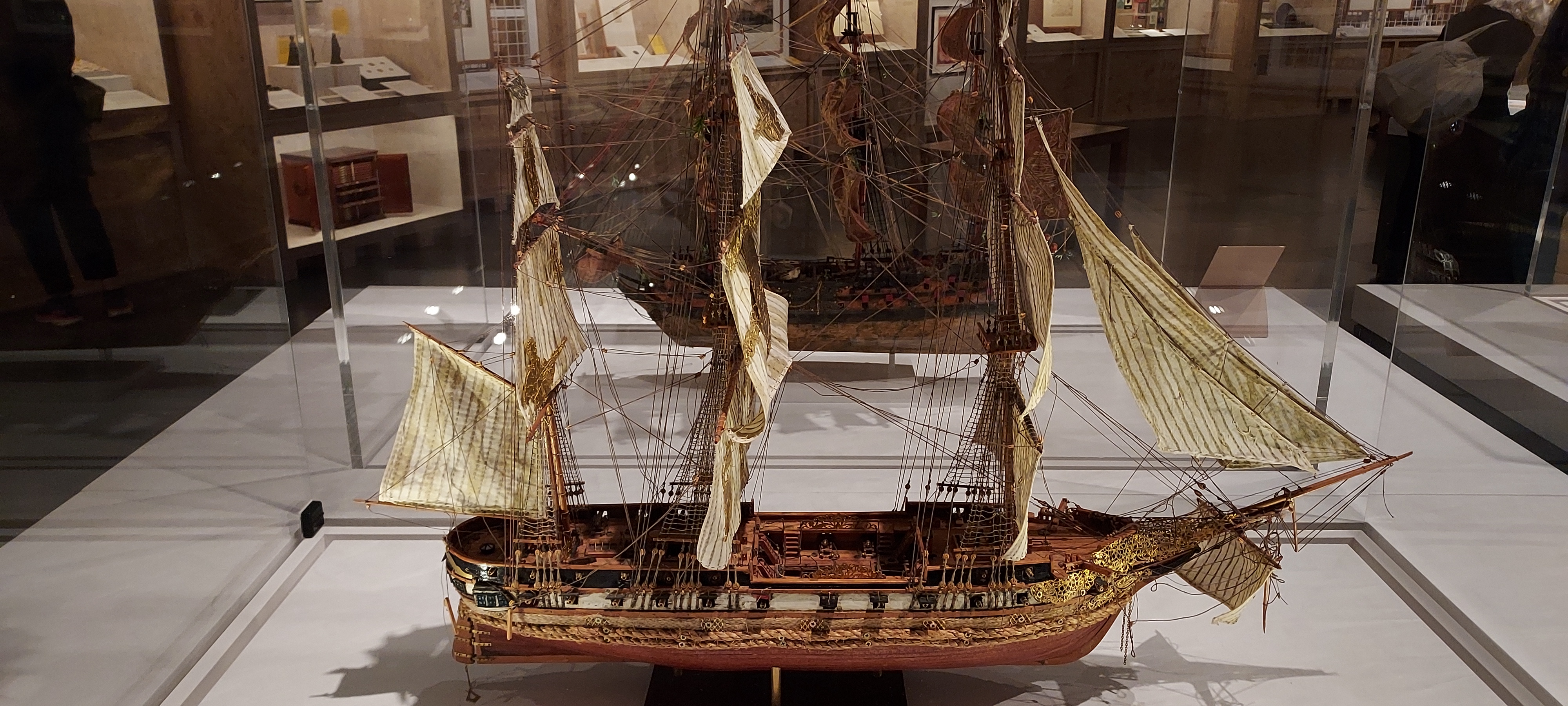
“Trade” focused on the establishment and expansion of mercantilists such as the East India Company (founded in 1600), the Company of Royal Adventurers into Africa (est. 1660), its successor the Royal African Company (chartered in 1672), and others involved in centuries of trans-oceanic human trafficking, enslavement and the development of extractive plantocracies.
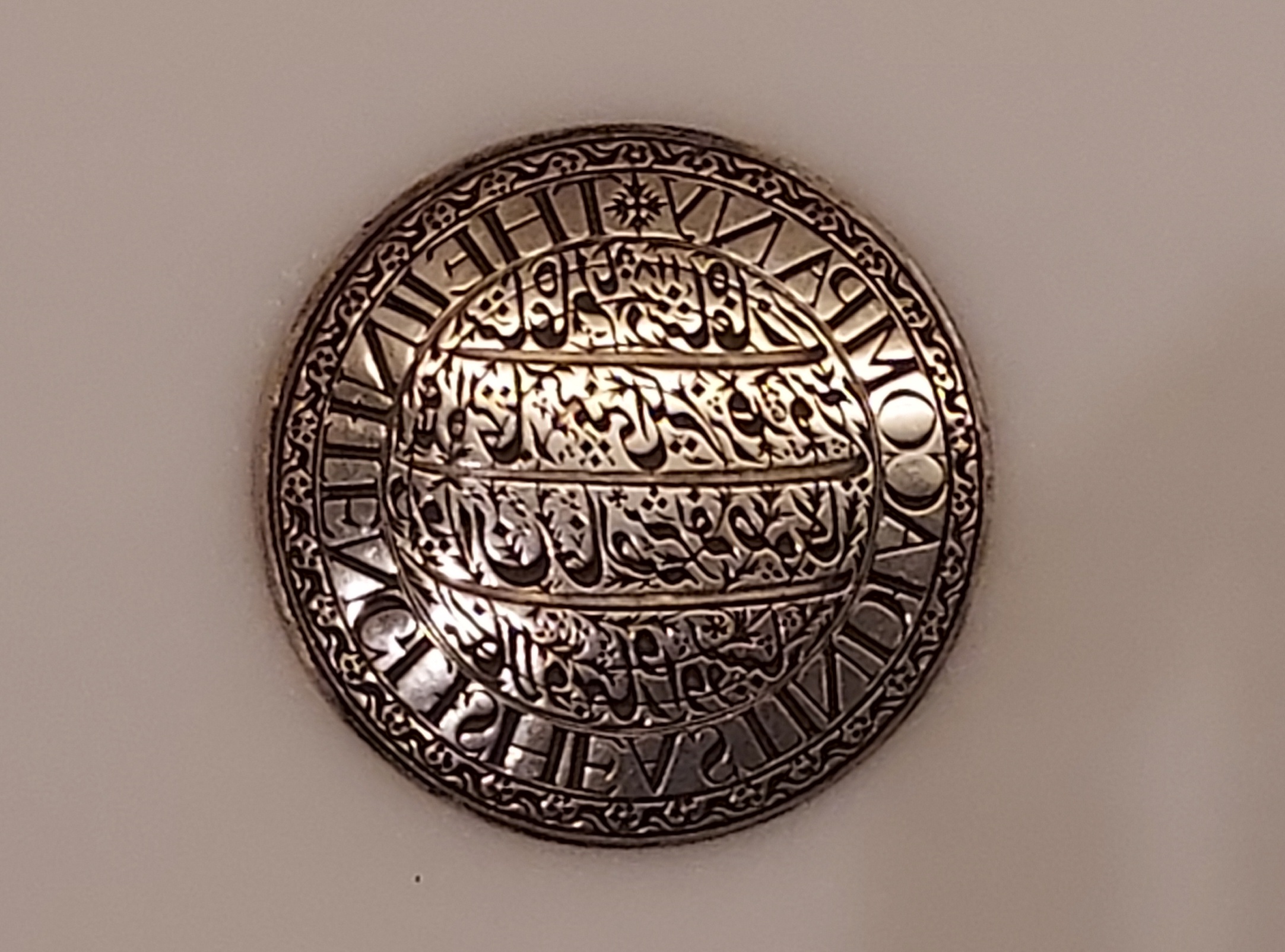
Conflict
Positioned centrally within the main display area, the “Conflict” zone shed light on the ways initial encounters and trading relations between culturally distinctive communities transformed into violent control, enforced subjugation, territorial acquisition and legislative changes imposed by European imperialists. Acts of resistance to the brutalities of oppression provided powerful counter-narratives on revolts, uprisings, rebellions and revolutions.

Treasure
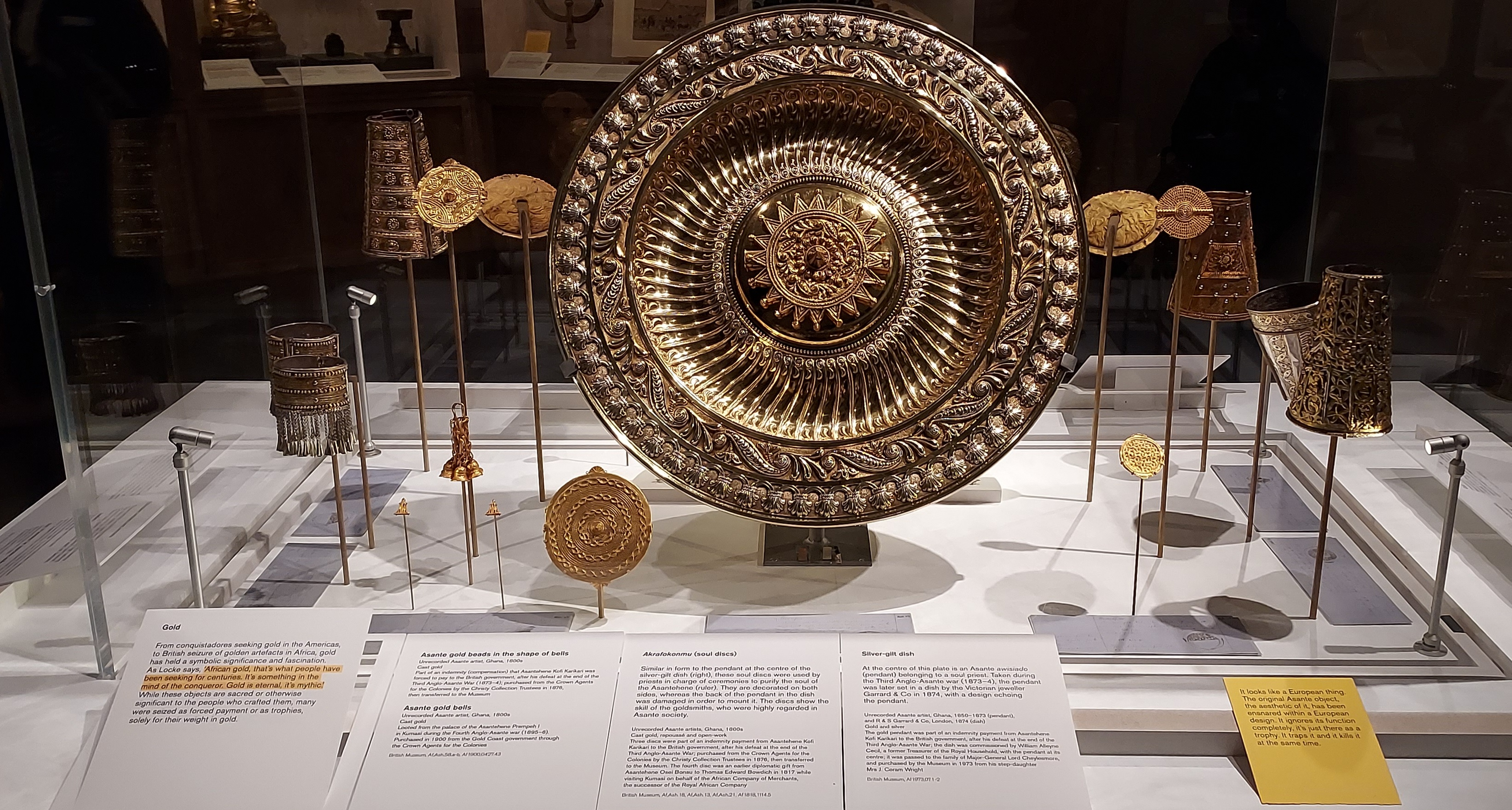
Stolen cultural treasures that were transported to Britain and presented as the spoils of military conflict were considered in this visually stunning but highly contentious section, highlighting how imperialist propaganda and ideologies of racist supremacism were deployed to justify and attempt to legitimise the military sieges, looting and dehumanisation inherent to colonial conquest.
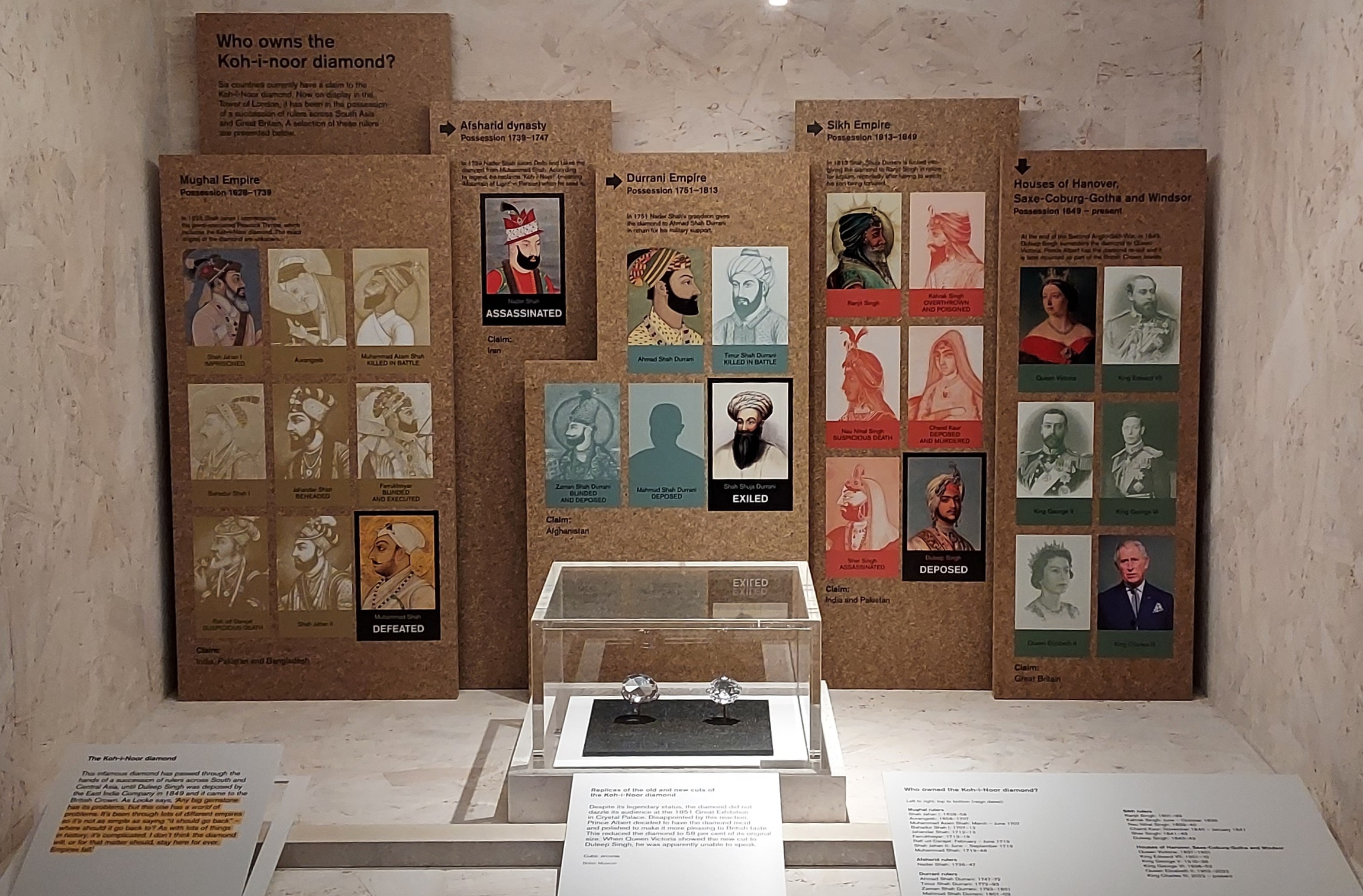

Some of the most contested ‘conflict treasures’ in Britain (including colonially sourced objects held by the British Museum and the Historic Royal Palaces) that are currently the subject of high-profile restitution claims were referenced to signify that the rightful return of precious and sacred cultural objects remains an integral aspect of decolonisation within the UK’s heritage sector.

Epilogue
“Epilogue” featured Hew Locke’s most direct calls to action for museums and other heritage institutions to confront and address Britain’s imperial atrocities and legacies. Returning to the Ghanaian/Akan principles of Sankofa, the final display of objects comprised a brass representation of the Sankofa bird (used as a gold weight), positioned next to Hew Locke’s OBE (Order of the British Empire) award, his Royal Academy medal and a replica of a West African Ife head sculpture. In combination, these exhibits spoke to the central theme of looking back in order to retrieve important knowledge about the past and inform wiser future decision-making.

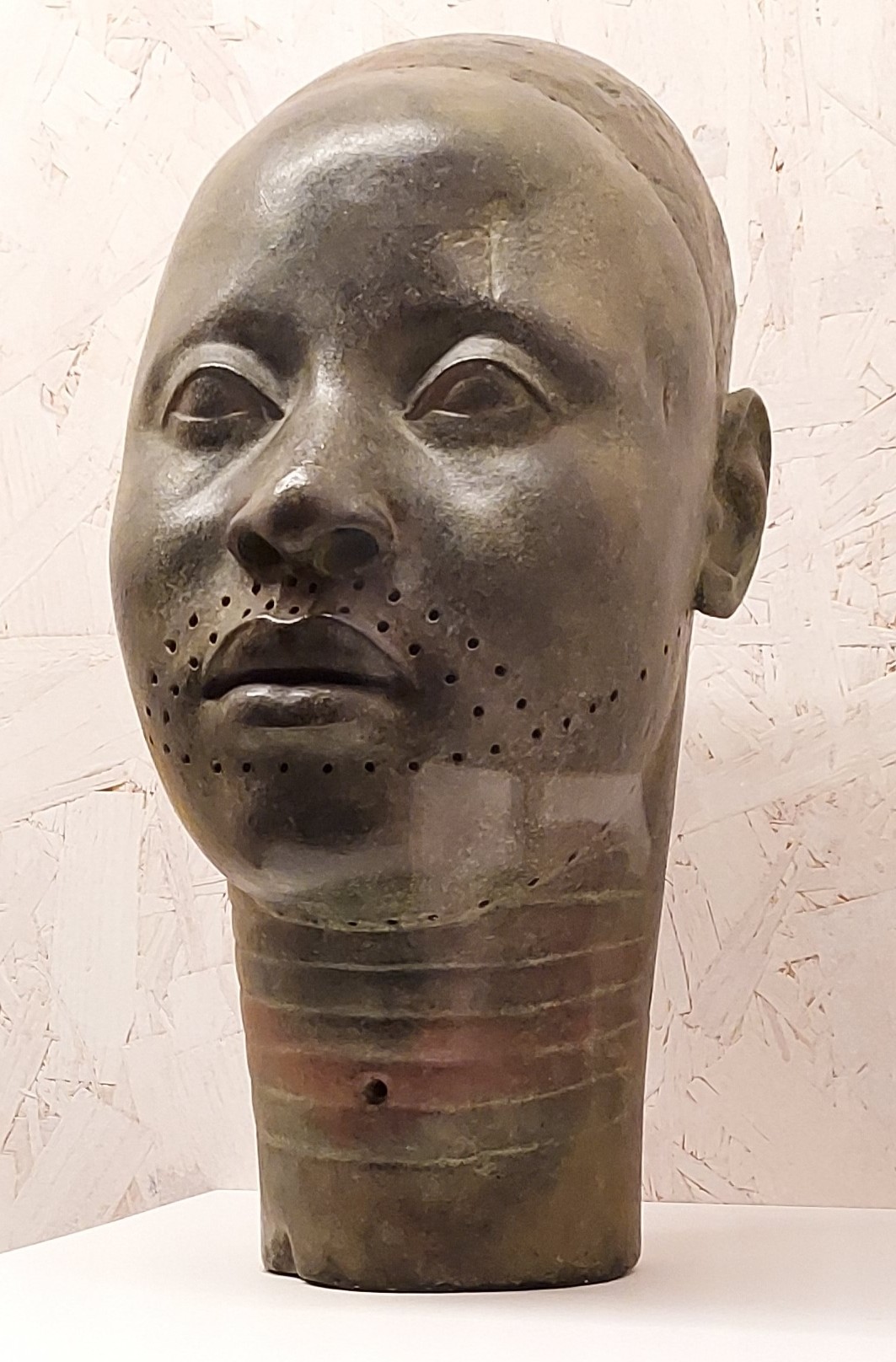
Concluding reflections
Viewing “Hew Locke: What have we here?” at the British Museum was an absorbing and insightful experience. The pairings of historical artefacts with contemporary sculptural installations from Locke’s oeuvre were visually intriguing and provocative. Every assemblage expanded my understanding about Empire and exemplified highly effective and nuanced ways for difficult and complex histories to be presented in museal settings. Locke’s long-standing practice of interrogating Empire through the production and placement of spectacularly embellished mixed-media installations was augmented by the inclusion of a newly commissioned series of figural sculptures known as “Watchers” – displayed at vantage points around the gallery. I welcomed the symbolic vigilance of these watchful characters, serving as a powerful visual statement that much more work is still needed to ensure institutions like the British Museum engage seriously with decolonisation – through progressive collection management practices, collaborative research initiatives, internationally diverse curatorship and the reparative return of contested holdings back to communities of origin.
Further information and web links
Hew Locke’s website: https://hewlocke.net/
Co-curator and author Indra Khanna’s website: https://www.indrakhanna.com/
The British Museum’s exhibition overview, image gallery and selected highlights from the featured holdings: https://www.britishmuseum.org/exhibitions/hew-locke-what-have-we-here

Leave a comment