The 16th century villa Palazzo Te in Mantua, northern Italy, was the inspiration and initial setting for Isaac Julien’s film-based art installation, All That Changes You. Metamorphosis (2025). This captivating and thought-provoking film was originally commissioned as part of a cultural programme commemorating the 500th anniversary of the historic building’s construction – drawing on Giulio Romano’s late-Renaissance architecture, the mythical stories depicted throughout the frescoed interiors and the serene courtyard and garden spaces to present a visual poem reflecting on the complexities of life, change, transformation, adaptation and survival.
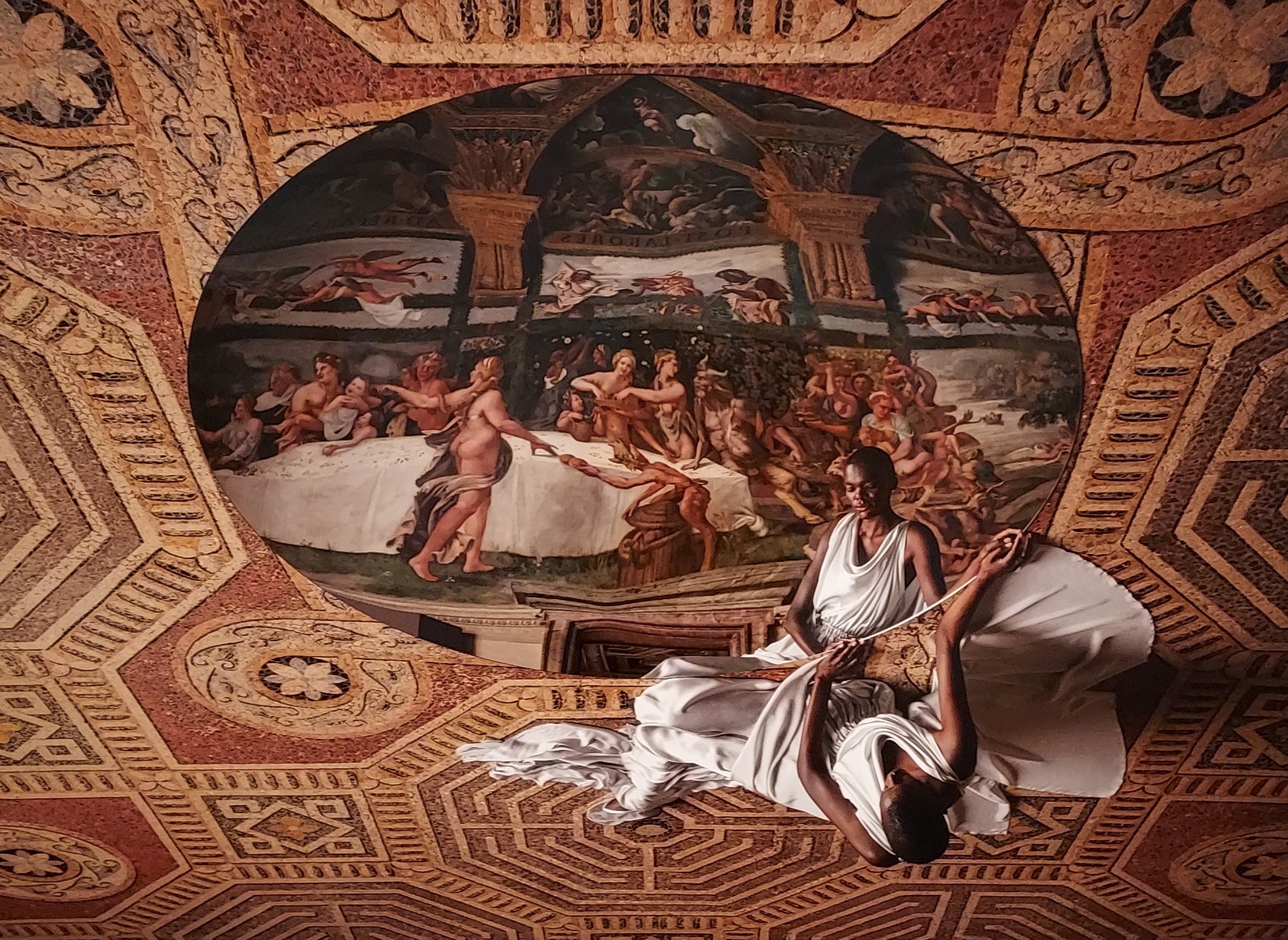
The carefully curated assemblage of filmed sequences, audio narration and ethereal soundscapes combined within this piece invite audiences to consider various forms and processes of transition, relationally, over time and space. Contrasting scenes that juxtapose built and natural settings, and also switch between visually sublime landscapes and images of scorched earth, encourage contemplation on the changing nature of our human-to-human interactions, our interconnectedness with other living things within Earth’s ecological systems, the impacts of natural disasters and human-made environmental crises around the world, as well as issues of identity and sense of place in relation to the wider cosmos.
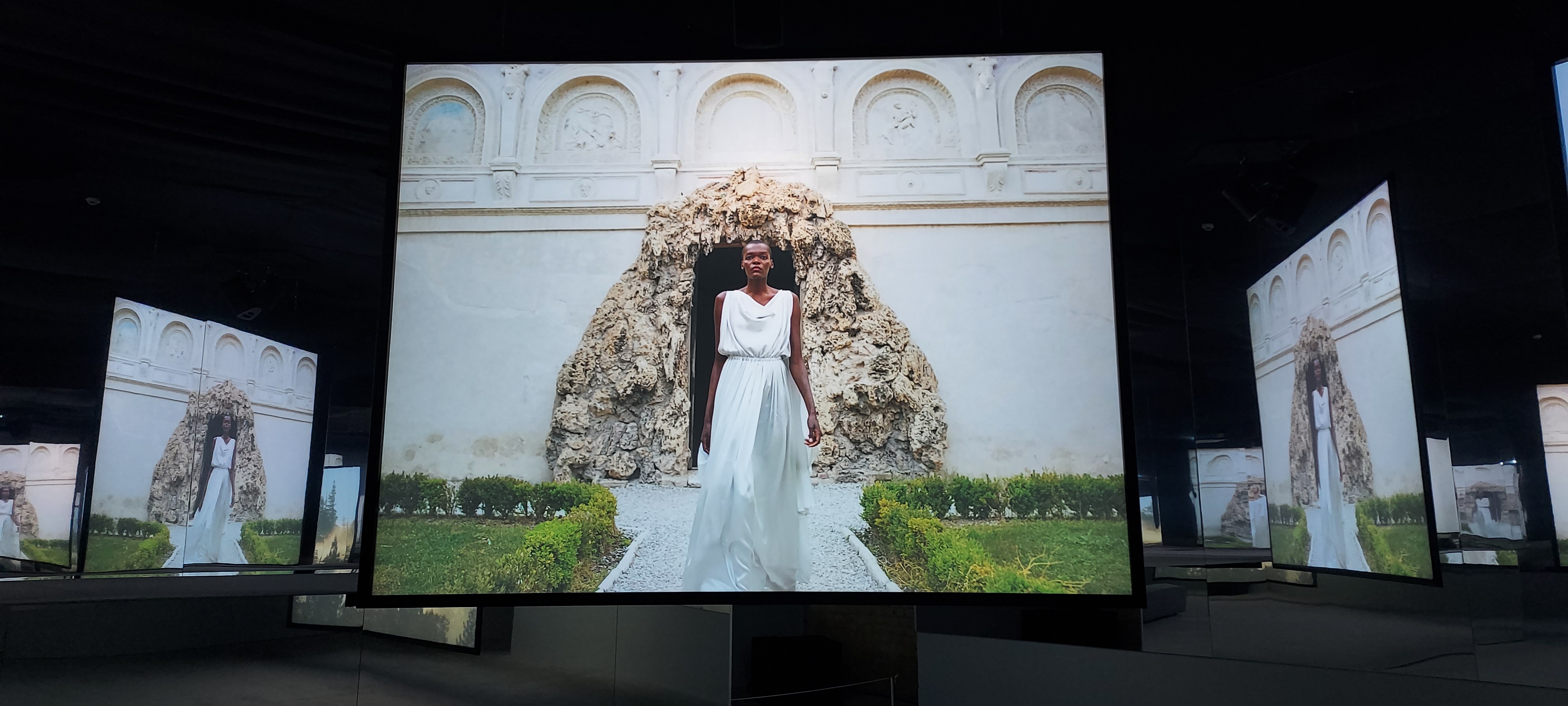
In keeping with the titular theme of metamorphosis, Palazzo Te serves as the departure point for a dynamic, cinematic journey of exploration, narrated by both seen and unseen storytellers. The static and moving images shift seamlessly from figurative representations of gods and titans painted on stone walls and ceilings, to drone-captured film footage of the upper canopy of Californian Redwood forests; underwater photography of marine ecosystems; satellite images of the lunar landscape; and creative, sci-fi imaginings of alternative worlds.

Architecturally, the sections filmed in the post-modern setting of Charles Jencks’ Cosmic House in Holland Park, London, and Herzog & de Meuron’s Kramlich Residence in Napa Valley, California, are also counterposed with Palazzo Te throughout the piece to provide alternative, contemporary, experimental and futuristic surroundings in which to focus on poignant socio-ecological issues concerning relational ethics of care, regenerative living, environmental sustainability, climate justice and co-existence within a shared ecosystem in flux.
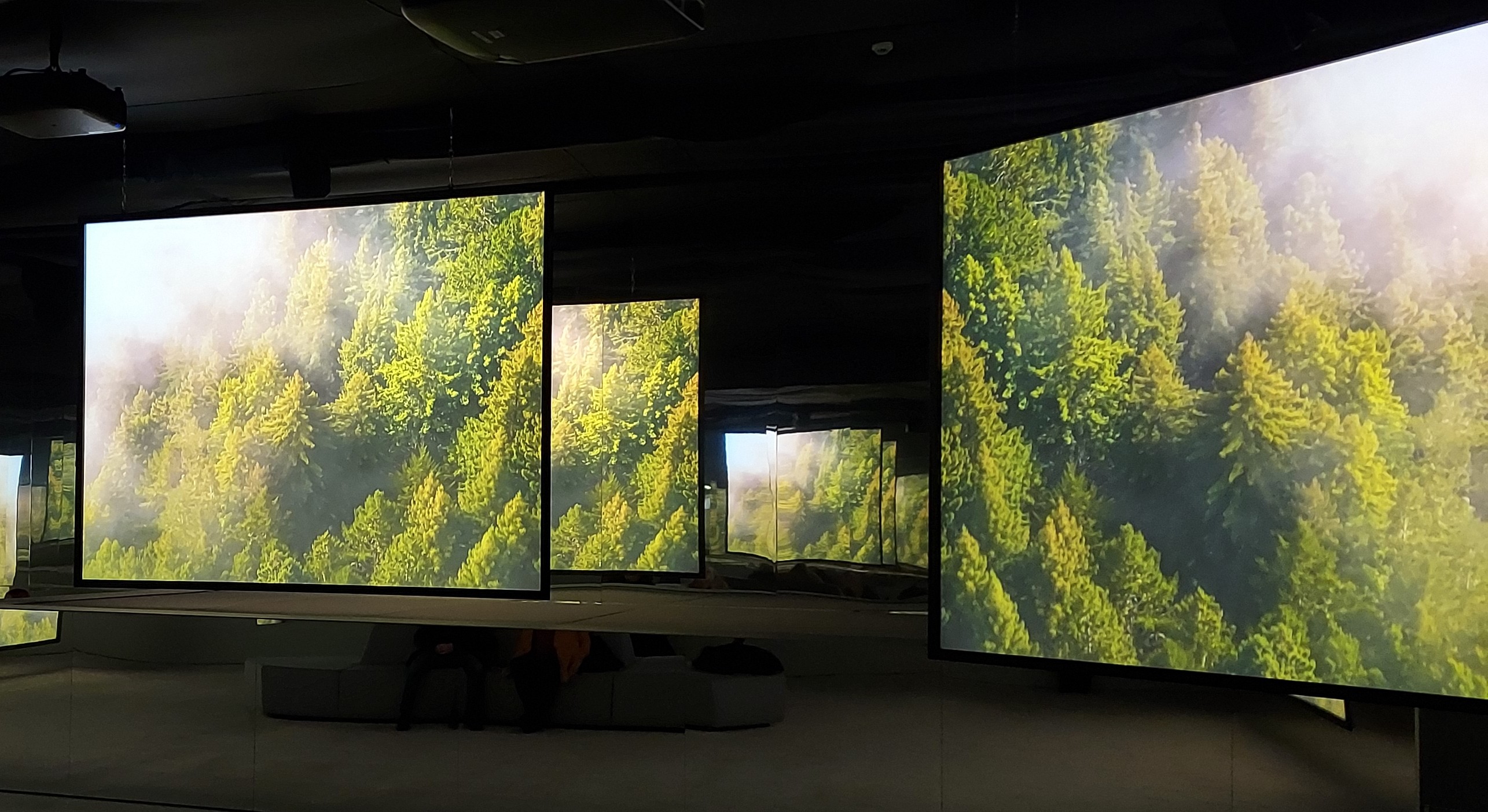
Having read about the genesis of Isaac Julien’s installation piece on the artist’s website, and also seen selected stills from the film in online press releases, I was delighted to visit Victoria Miro art gallery in London during mid-February to experience an immersive, multi-channel screening of All That Changes You. Metamorphosis, along with an accompanying photo exhibition.
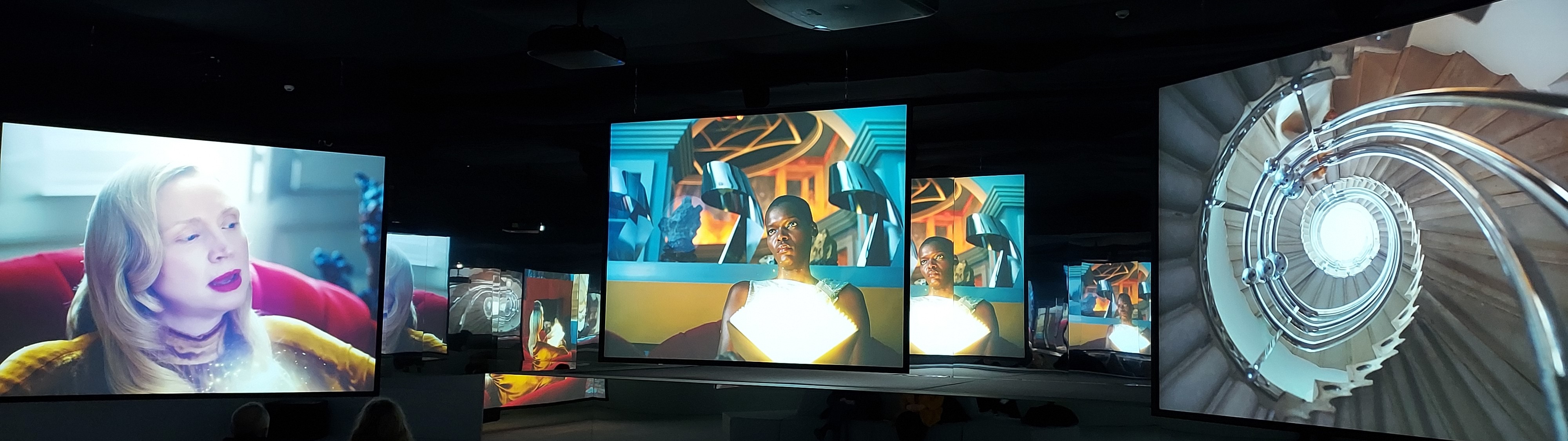
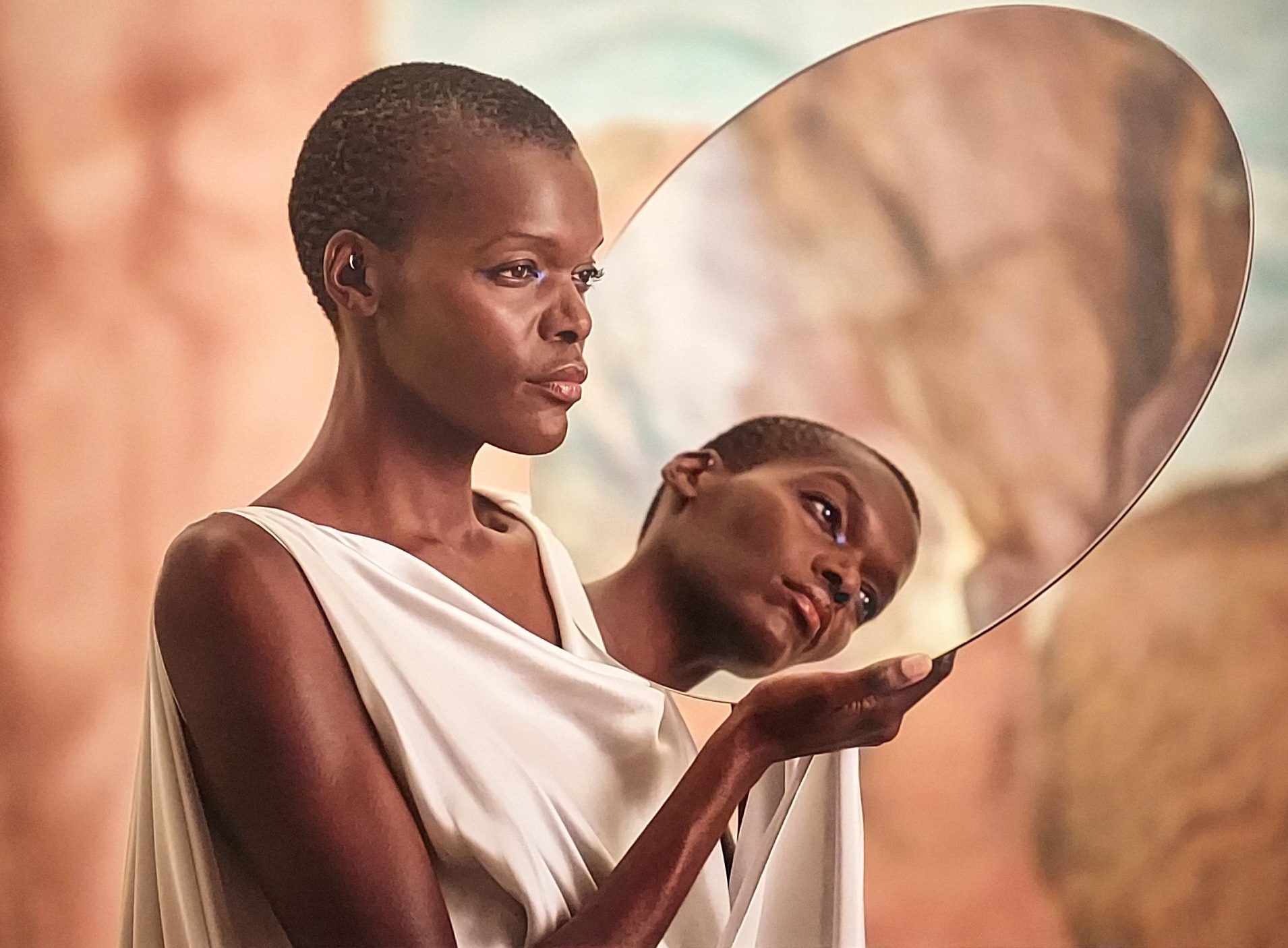
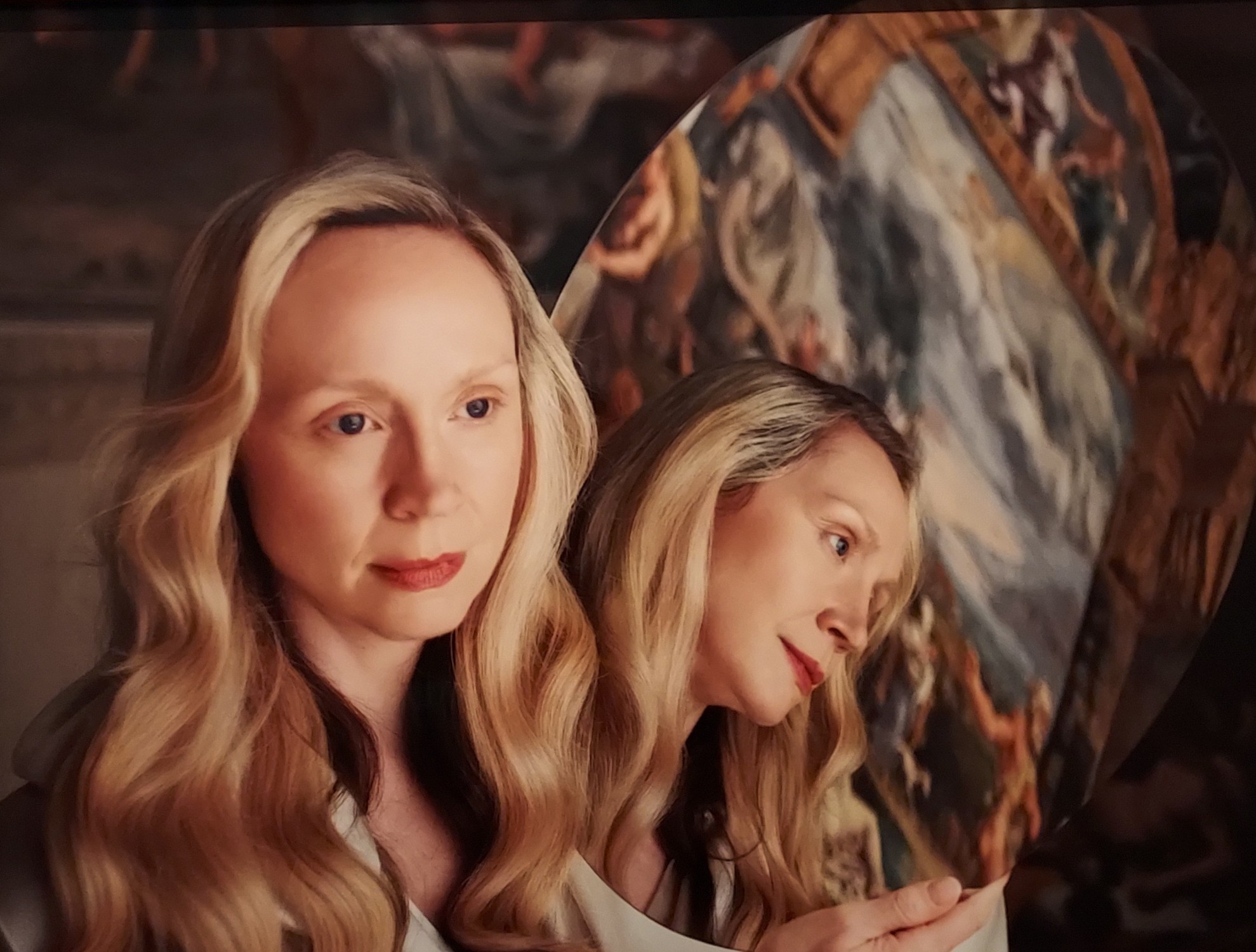
Displayed on two levels, the c.24-minute film was shown across five screens inside a mirrored upper gallery, preceded on the ground floor by a wall display of seven, large-scale, framed photographic prints depicting the film’s protagonists – Lilith (played by Sheila Atim) and Naomi (played by Gwendoline Christie). Both women were recorded contemplating a combination of social, ecological and philosophical themes that not only related to human becoming, but also addressed (visually and textually) what the feminist theorist Donna Haraway refers to as the responsibilities of “becoming with” other species in ways that are harmonious and non-dominant (Haraway 2008, p. 244).
“Becoming is always becoming with — in a contact zone where the outcome, where who is in the world, is at stake” (Donna J. Haraway, 2008)
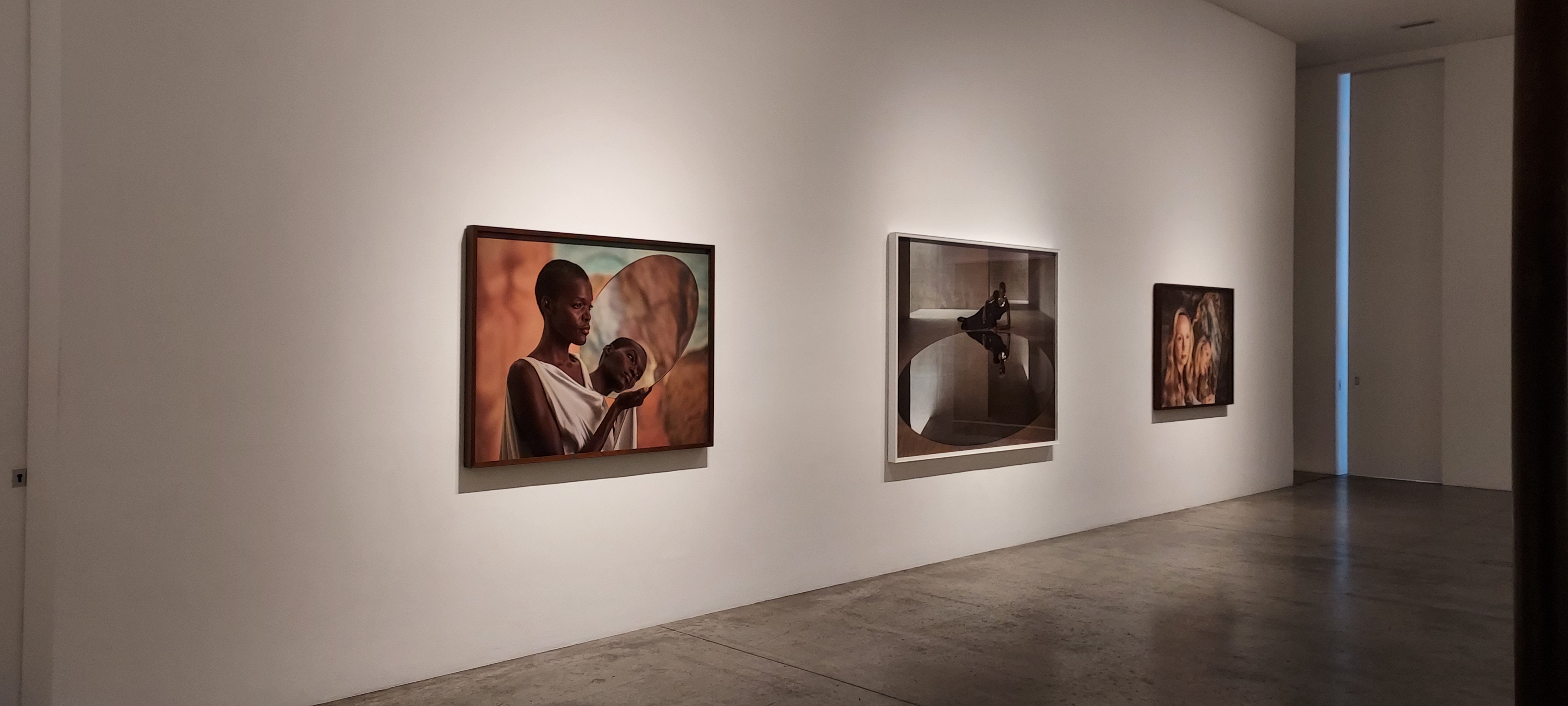
The ground floor display served as a visual introduction to the key locations of Palazzo Te, the Kramlich Residence and the Cosmic House, whilst also providing an opportunity to view close-up portraits of the two main characters narrating the filmed poetic duologues.
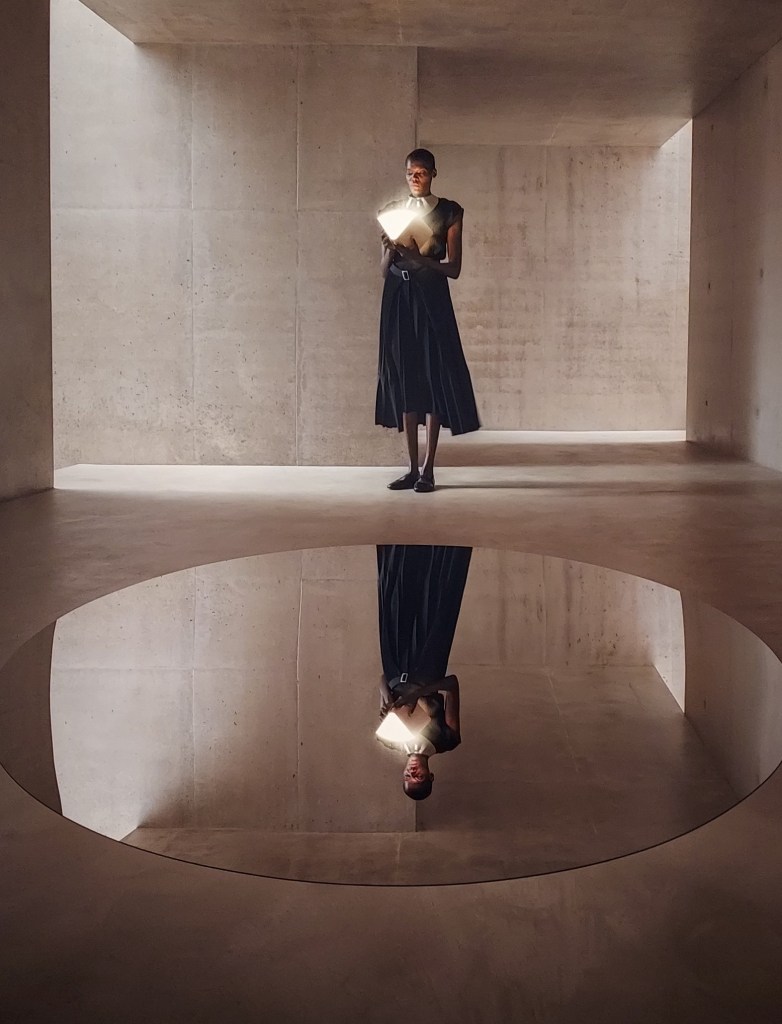
Lilith’s Moon (All That Changes You. Metamorphosis), 2025. Dimensions of the original photographic print: 240 x 180 cm.
Additionally, the photographs and their titles provided further insights about the symbolic motifs that feature regularly in Isaac Julien’s lens-based work – particularly his use of mirrors, pools of water and other reflective surfaces as signifiers for focusing attention on questions about identity, the gaze, how we see ourselves and one another, kinship, ‘more-than-human’ (or ‘beyond human’) relations and learning to live responsibly together.
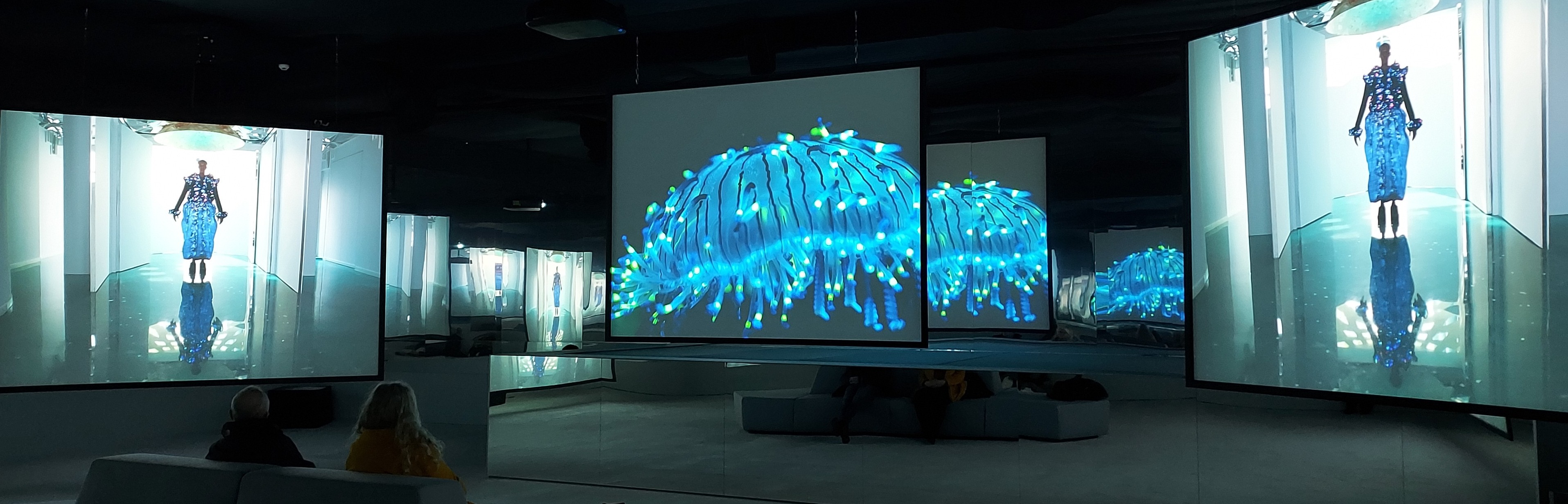
Poignant visuals and visionary scholarship
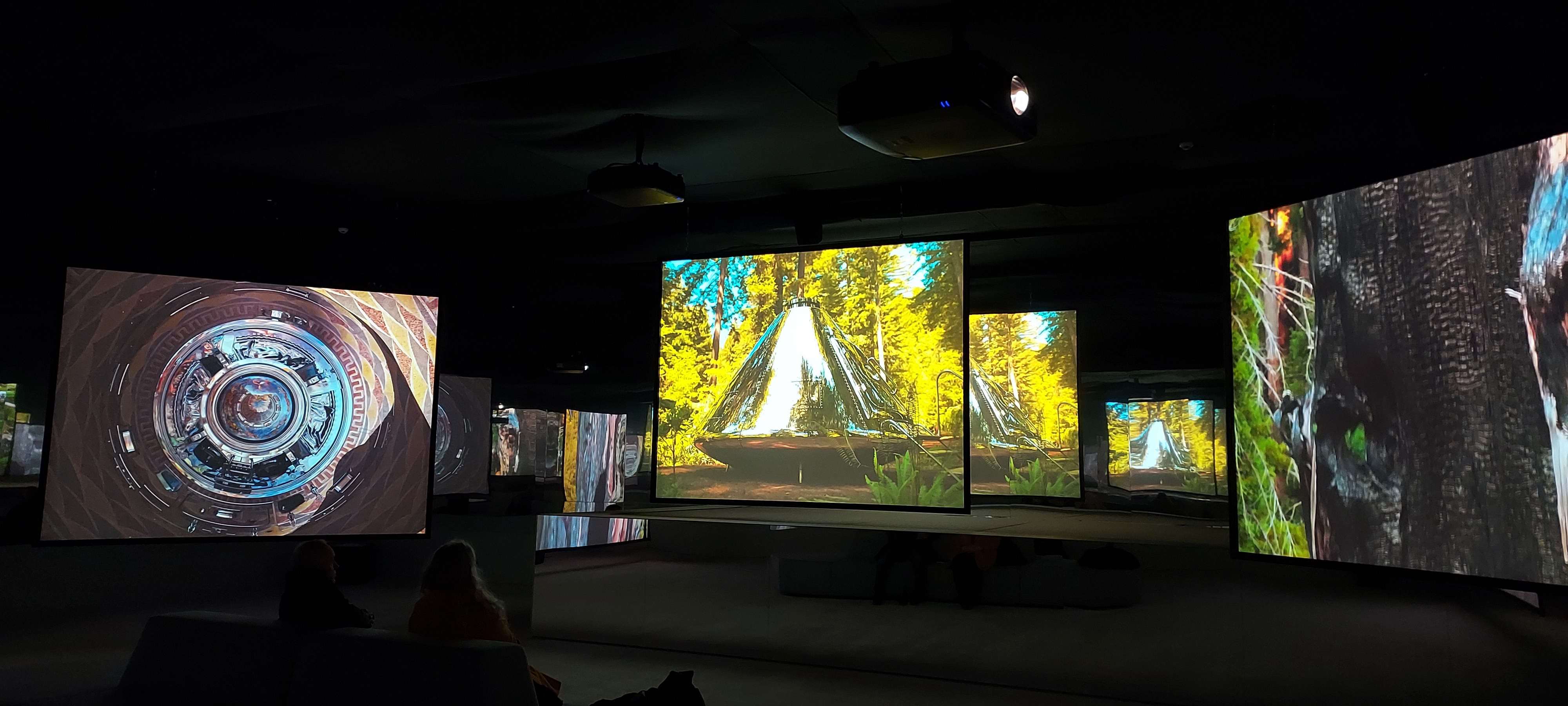
In response to the many social and ecological crises of the 21st century, the film’s concluding sections return full circle to the work of Donna Haraway – quoting from her book “Staying with the Trouble: Making Kin in the Chthulucene” (2016):
“Our task is to make trouble, to stir up potent response to devastating events, as well as to settle troubled waters and rebuild quiet places… Staying with the trouble does not require such a relationship to times called the future. In fact, staying with the trouble requires learning to be truly present, not as a vanishing pivot between awful or edenic pasts and apocalyptic or salvific futures, but as mortal critters entwined in myriad unfinished configurations of places, times, matters, meanings.” (Donna J. Haraway, 2016)
Donna Haraway’s perspectives are also aligned with the work of other notable scholars, such as Octavia Butler, Naomi Mitchinson and Ursula K. Le Guin. In particular, the character Lilith (played by Ugandan-British actor Sheila Atim) is shown speaking to issues of relational change, empathy, and responsible living on a fragile planet with references to the Afrofuturist visions of African-American speculative fiction author Octavia Butler (1947-2006).
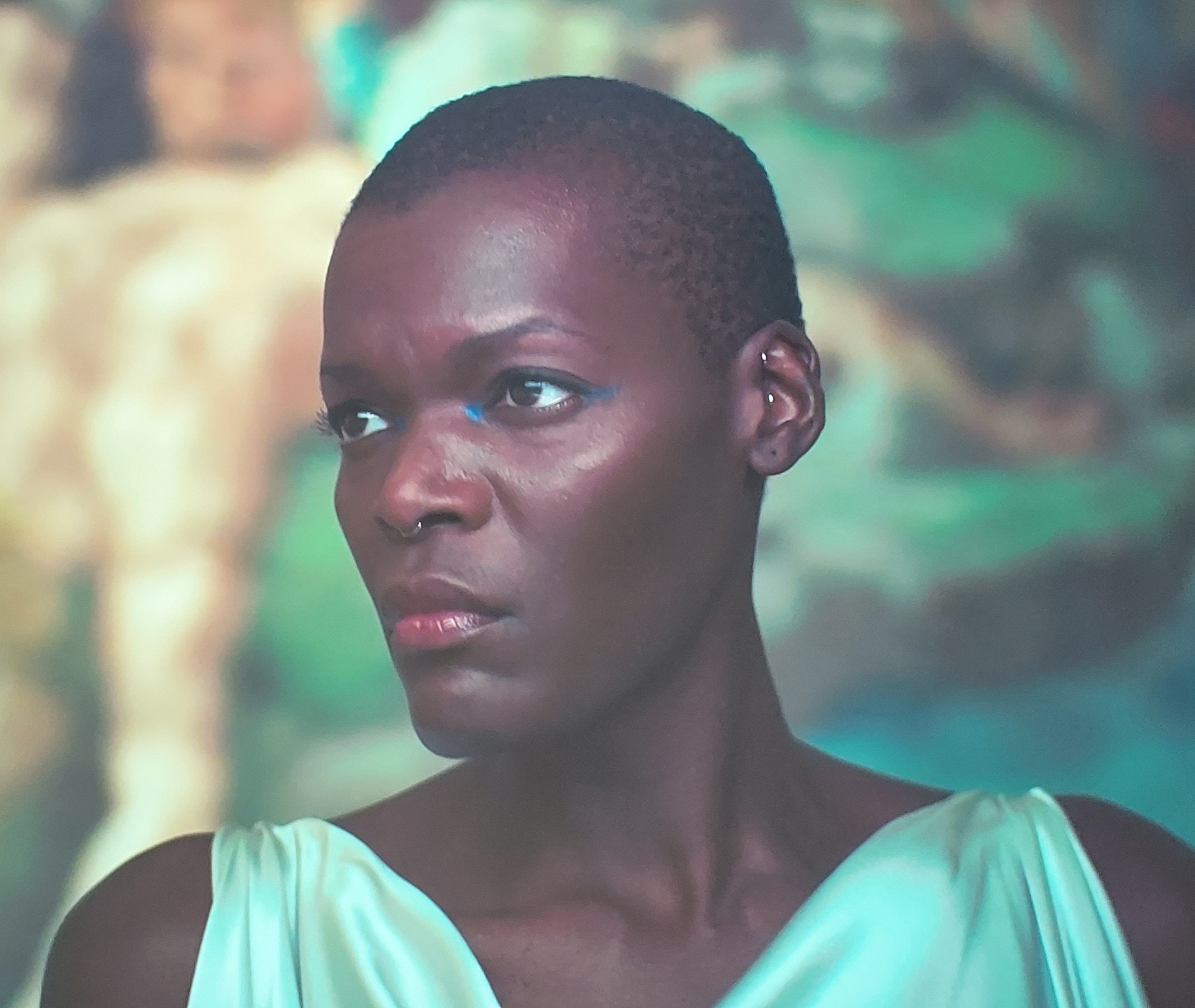
So, to conclude this review, I also return to Octavia Butler’s writing to cite the key lines from her 1993 novel, “The Parable of the Sower,” which – similarly to Palazzo Te – were a source of inspiration for Isaac Julien’s poignant and poetic installation:
“All that you touch
You Change.
All that you Change
Changes you.
The only lasting truth
Is Change.
God Is Change.” (Octavia Butler, 1993)
The exhibition Isaac Julien: All That Changes You. Metamorphosis continues at Victoria Miro (16 Wharf Road, London N1 7RW, UK) through to 21 March 2026.
From April, a site-specific presentation will be shown at the Cosmic House, London, through to December 2026.
Further information and web links
Butler, Octavia E. (1993). Parable of the Sower. New York: Four Walls Eight Windows [Google Books preview]
Frieze Magazine – Isaac Julien: All That Changes You. Metamorphosis. Exhibition: 13 February – 21 March 2026. Press Release. https://www.frieze.com/event/isaac-julien-all-changes-you-metamorphosis
Haraway, Donna J. (2008). When Species Meet. Minneapolis: University of Minnesota Press.
Haraway, Donna J. (2016). Staying with the Trouble: Making Kin in the Chthulucene. Durham: Duke University Press.
Isaac Julien Studio (2025) All That Changes You. Metamorphosis. Project synopsis: https://www.isaacjulien.com/projects/41/
Lorenzo Giusti (2025) Isaac Julien: All That Changes You. Metamorphosis. From Science Fiction to Speculative Fabulation. Curator’s essay: https://www.victoria-miro.com/isaac-julien-lorenzo-giusti-essay/
Victoria Miro exhibition web space – https://www.victoria-miro.com/exhibitions/isaac-julien-london-2026/

Leave a comment