
Following an extremely hard-fought and impassioned anti-racism campaign led by journalist and rights activist Sara Myers, the senior management team of the Barbican arts centre issued a formal statement on Tuesday 23rd September to confirm their cancellation of the controversial installation ‘Exhibit B – Third World Bunfight’ by South African ‘artist’ Brett Bailey, which was scheduled for display at the Vaults in central London from 23rd-27th September 2014.
A section of the Barbican’s statement read as follows:
“We respect people’s right to protest but are disappointed that this was not done in a peaceful way as had been previously promised by campaigners …We believe this piece should be shown in London and are disturbed at the potential implications this silencing of artists and performers has for freedom of expression.”
(Source: http://www.barbican.org.uk/ – News Release, dated 23 September 2014).

Despite closing down the event, the Barbican have continued to reiterate that they consider ‘Exhibit B’ to be an important piece of anti-racist performance art which “critiques the ‘human zoos’ and ethnographic displays that showed Africans as objects of scientific curiosity through the 19th and early 20th centuries.” However, the nature of the live performance tableaux featured in this work – which present male and female actors of African descent shackled, enchained and imprisoned in cages with labels stating, “The blacks have been fed” – has led thousands of people (myself included) to question whether this (so called) performance art piece merely reinforces the barbarity and inhumanity of past colonial exhibiting practices in ‘Human Zoos’ without actually doing anything to challenge them, and (more importantly still) fails to achieve any anti-racist outcomes that have the potential to make life better for the communities of people still living with the impacts and legacies of that violent and traumatic history.
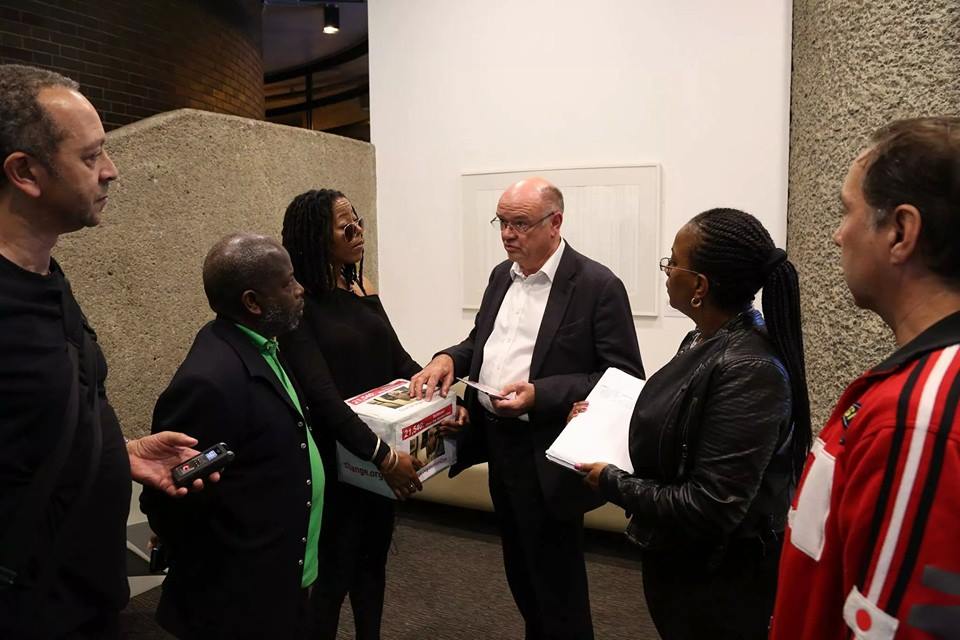
The UK-wide petition calling for a boycott of Exhibit B’s London run was launched online in mid-August, and over the course of c. 5 weeks attracted almost 23,000 signatures from people of all ethnic and cultural backgrounds. Many signatories documented deep concerns about the project’s conceptualisation, and also posed serious questions to the Barbican and Brett Bailey about their underlying motivations, commitments, and competencies as regards delivering effective anti-racist arts practice.
A diverse coalition of organisations (including Birmingham Black & Ethnic Minorities’ Association (BEMA), Birmingham Empowerment Forum, BARAC UK, Organisation for Black Unity, Operation Black Vote, Ligali, and UpRise) got involved to provide structural and strategic support to Sara Myers’ boycott campaign, and accelerated the dissemination of the petition’s objectives to a wider section of the general public far beyond anti-racist activists and performing arts audiences.

A sizeable number of supporters issued public statements in support of the boycott of ‘Exhibit B’ via social media, the blogosphere and a variety of other online forums – with many black Britons indicating that their African and Caribbean heritage was a pivotal factor in identifying ‘Exhibit B’ as a disrespectful desecration of ancestral memories relating to enslavement histories and the ongoing struggles for equality and human rights in the post-emancipation, post-colonial era.
Nothing in the project’s promotional literature circulated by the Barbican, or by UK Arts International who released prior footage of the work filmed in other European cities, has provided any confidence to anti-racism campaigners that the Barbican’s valorisation of one artist’s singular and subjective imaginings about the past violence meted out by 19th century imperialists towards enslaved and colonised Africans would do anything other than enhance the pain and trauma felt by successive generations of diasporic descendants tasked with honouring the memories of their forebears.
One early petition signatory – Toyin Agbetu, founder of the Pan-African group Ligali – wrote:
“Any racist exhibition that was offensive to African people in the past retains its potency to cause offence today. Why is it so hard for many to grasp this? Most would accept that it is inappropriate to broadcast a sitcom making light of life in holocaust prison camps. So why do they fail to recognise how vile it is to hold an exhibition that dehumanises African people for money and entertainment?”
(Petition statement by Toyin Agbetu – Source: Change.org August 2014)
More recently, blogger Mayo Olubo also stated (in the wake of the cancellation of Exhibit B):
“The logic of using shock to challenge racism is fundamentally flawed. We live in a world where we are constantly told that being exposed to violent video games and violent images makes us more violent, yet we are to believe that seeing racist imagery of black people suffering, degraded and humiliated will make us less racist. This sort of cognitive dissonance is one of the things that makes challenging racism so difficult. Becoming a voyeur to black suffering will not change a mindset it can only confirm what you already believed.”
(Source: https://medium.com/@my_yo date : 25/09/2014)
Integral to the aims of the petition and the call for a boycott was a heartfelt plea for consultation and dialogue with senior representatives of the Barbican’s management team. Regrettably, those requests were initially met with resistance and filibustering tactics, and were only acceded to grudgingly once the petition and its associated anti-racist protest activities began to attract mainstream media attention.
The Barbican’s behaviour over the course of the campaign was completely in keeping with the stonewalling tactics faced by many black-led grassroots organisations who have tried to alert mainstream institutions (in any sector or industry, including the arts) to the presence of overt and institutionalised racism in their policies, practices and outputs. Often, the only trigger for an organisation to actually listen to concerns about racial discrimination that impact most acutely on Britons of African descent is when the issue attracts the attention of a broader demographic of people beyond the UK’s black and minority ethnic communities. Why? Because institutions like the Barbican place a higher value on listening to the opinions (and responding to the greater social and economic capital) of their predominantly white mainstream ticket-buying audiences.
The Public Debate at Theatre Royal Stratford East – 22 September 2014
On Monday 22nd September an audience with a different complexion to the prevailing elites visiting the Barbican’s events in the city centre attended a hastily arranged meeting at the Theatre Royal Stratford in east London to participate in a public debate – titled, “EXHIBIT B – THE DISCUSSION: LESSONS & LEGACY.” Although the meeting had been convened by Nitro – the black-led arts organisation paid to recruit black actors for Brett Bailey’s project – nobody from that organisation chose to be part of the panel of discussants. Instead, the panel was chaired by Olu Alake (a former senior adviser for the Equalities and Human Rights Commission) and included: Sara Myers (Journalist, Activist and Boycott Exhibit B Campaign Organiser), Paul Richards (Creative and Educational Director, UpRise), and Zena Edwards (Writer and Spoken Word Artist) – speaking on behalf of the boycott campaign; Louise Jeffreys (Director of Arts, Barbican), Leon Nyiam (Exhibit B performer) and Lemn Sissay (Poet and Artist) – speaking in defence of Exhibit B.
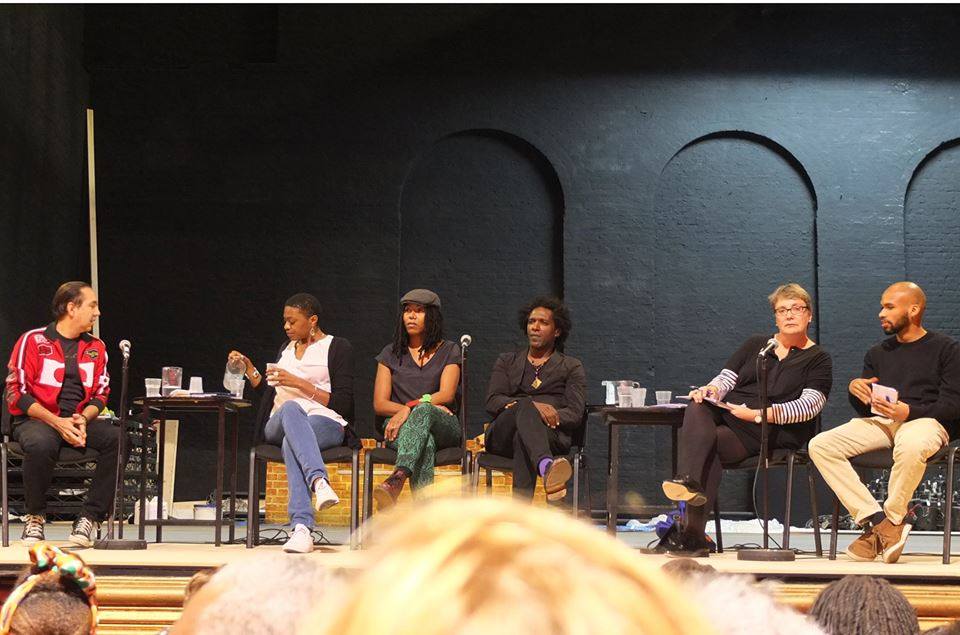
Sara Myers, Paul Richards and Zena Edwards all pressed home extremely cogent points about the need for the Barbican to have had prior consultations, and to be open to exploring pluralist perspectives on effective ways to sensitively curate difficult knowledge about colonial violence for diverse, multi-ethnic and cross-cultural audiences.
Incredulously, this was met with strident opposition by Lemn Sissay and Louise Jeffreys, who both felt that an artist’s freedom to present their singular perspectives was of paramount importance – even if their resulting work was in extreme poor taste, proven to be racist and likely to cause widespread offence. In fact, Louise Jeffreys confidently declared that “The arts should not shy away from difficult subjects” and “The artist can do anything they like” – even to the point of causing public outrage.
Moreover, the only dialogues with black publics that were mentioned as an ongoing concern to the Barbican were consultations relating to “low engagement in the arts” – thus conflating blackness with low participation and a seeming lack of artistic interest, whilst ignoring the social exclusions and structural discriminations that regularly restrict access to the arts for many people from BME (black and minoritized ethnic) backgrounds (as audiences, employees and board-level decision-makers). It was evident that black publics were under-valued as key contributors to the arts and culture industries, not recognised as influential ticket-buying audiences, and under-acknowledged as significant tax-paying contributors to the Barbican’s public funds.
An arrogant disregard was revealed in relation to the commissioning process surrounding Brett Bailey’s work – which appeared to consist of one person watching a video, feeling “profoundly moved” by it, then simply endorsing the project without a moment’s thought given to securing alternative perspectives from black-led anti-racist organisations, internationally renowned scholars on the sociologies of ‘race’ and racism, or proven experts on the successful curation of arts projects detailing the history of ‘Human Zoos’ (E.g. Lilian Thuram Foundation: Fondation Lilian Thuram – Education contre le racisme) to advise on the complex content relating to colonial and contemporary racisms. This was made worse by an open admission that nepotism rather than fair and competitive tendering processes had determined Nitro’s appointment as the recruiting agents for performers in ‘Exhibit B’.
As always there was little time for members of the audience to air views after the panelists had spoken. Nevertheless, it was moving to hear poet, visual artist and activist Zita Holbourne mention ACTSA‘s solidarity with the boycott campaign[1], and also to hear moving personal recollections from a young black South African arts professional who had strived to get her anti-racist artwork about the Marikana miners’ massacre commissioned – and (ultimately) had been rejected and ignored in South Africa, as well as internationally, because the key arts organisations were only interested in valorising projects proposed by established white artists like Brett Bailey.
The Word on the Streets – 23 September 2014
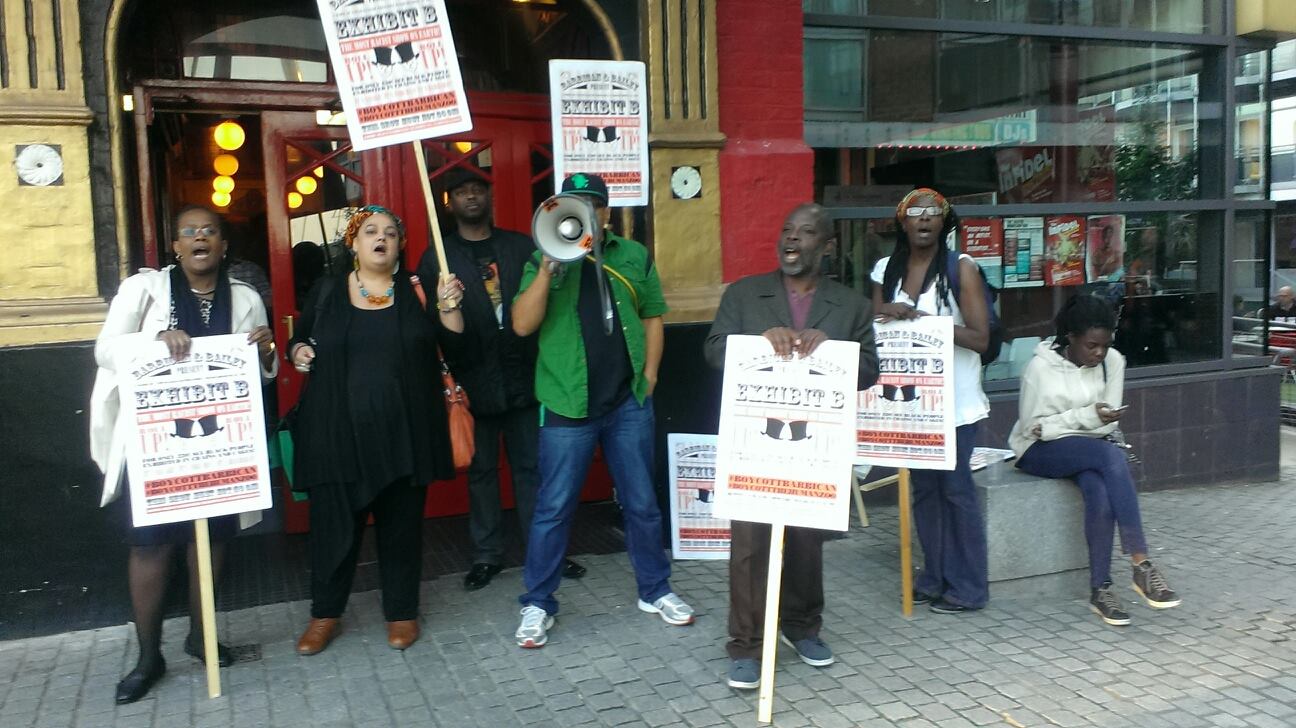
The media organisation JetBlakInk recorded an excellent short film which documents the on-street actions taken by Sara Myers and fellow anti-racism activists in opposition to ‘Exhibit B’ outside the Vaults on 23rd September. To date, the Barbican and the Vaults claim that their decision to close the event and cancel the London run in its entirety was for health and safety reasons. However, the campaign supporters (and JetBlakInk’s recorded footage – shown here) present a very different perspective on the realities of what took place.
It is wonderful that JetBlakInk uploaded their film via YouTube to communicate the voices of the people at the heart of leading this peaceful campaign to a significant (albeit interim) conclusion.
[Link to JetBlakInk’s film: Exhibit V for Victory – Human Zoo Cancelled in London]
Some closing thoughts…
One of the most poignant comments made during Monday’s public debate in Stratford occurred when Sara Myers gave her opening address to the attending audience (of whom >80% were black Britons of African and Caribbean descent) and stated:
“African people are the canvas, but African people were not consulted.” Sara Myers
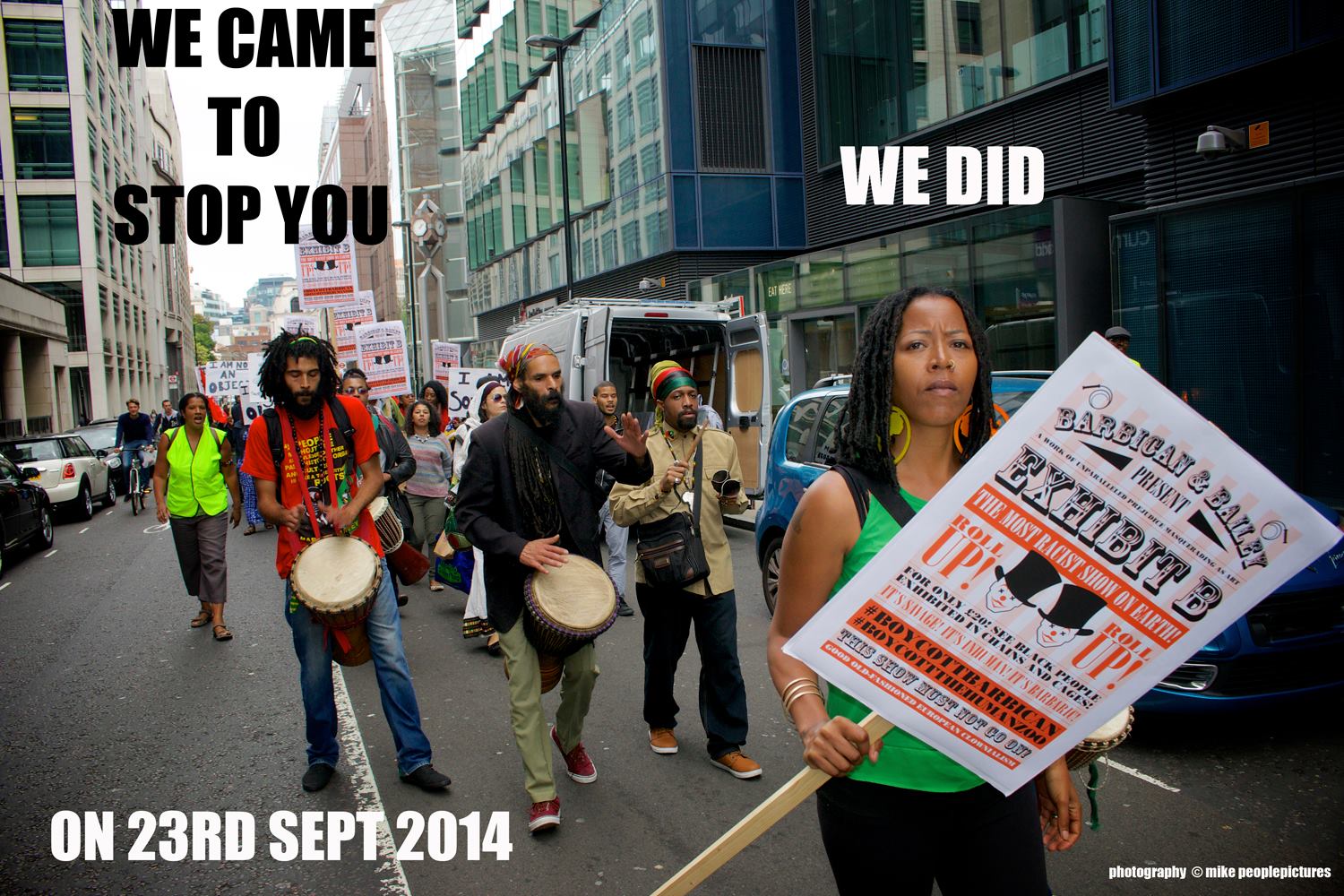
More than anything else heard to date in relation to these events, this quote sums up all that has been at fault with this entire scenario about the ill-judged commissioning and consequential closing down of ‘Exhibit B’ by the Barbican here in London. Although the Barbican are largely responsible for everything that has ensued, they should also take note that they have the potential to be a key part of the solutions (going forward), by joining forces with diversity organisations to work collaboratively on eradicating discriminatory practices from the arts.
Clearly, my account of these events suggests that there is still a very long way to go before a full commitment towards anti-racism in policies, practices and pedagogies is realised in the UK arts and culture sector…but the courageous stand against overt and institutionalised racisms taken by Sara Myers and her supporters this week is a considerable step forward.

WEBSITE LINKS:
For further information and background context about the ‘Boycott the Human Zoo’ campaign, please see the official website at http://boycotthumanzoouk.com/
Additional contextual information about why the petition and the protests were launched is also detailed on the Organisation for Black Unity (OBU) website at http://www.blackunity.org.uk/what-we-do/boycott-the-human-zoo/
NOTES:
[1] Action For Southern Africa (ACTSA) is the successor to the Anti-Apartheid Movement (AAM) and is a democratic, member led, campaigning organisation (see: http://www.actsa.org/). Part of their public statement to the Barbican read as follows:
“2014 is the 20th anniversary of South Africa becoming a free and democratic country. The country is dealing with the legacy of apartheid and colonialism, including the doctrine of white supremacy. South Africa is trying to deal with this horrific past and its impact by challenging racism as it builds a democratic, non-racist and non-sexist state through significant processes of reflection, learning, engaging in dialogue and discussion including the Truth and Reconciliation Commission, the Apartheid Museum and Robben Island. This is in contrast to a one-off show that depicts black people as objects, yet does not seem to have involved black people in the development of the concept and production and which many view as voyeuristic.” Written by Tony Dykes, ACTSA Director (Source: http://www.change.org/p/withdraw-the-racist-exhibition-exhibition-b-the-human-zoo).
RELATED POSTS ON THE MUSEUMS GEOGRAPHIES BLOG:

Leave a reply to thegatvolblogger Cancel reply